

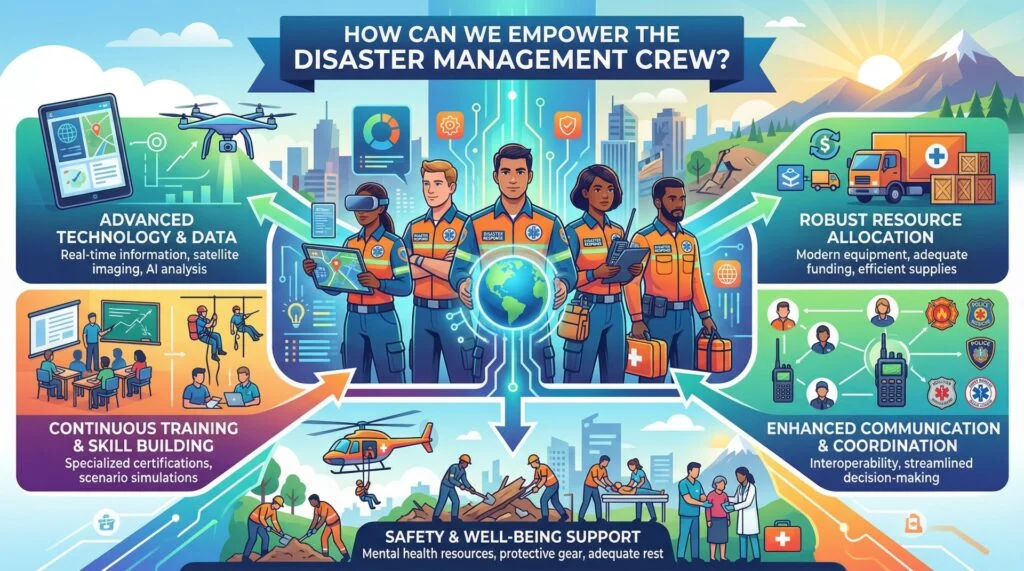
1. Intro: How Can We Empower The Disaster Management Crew
When disasters happen, disaster management teams are very important because they help keep people safe, reduce damage, and help things go back to normal quickly. When there is an earthquake, flood, fire, or accident, these teams are usually the first to reach the place. If they act fast and do their job well, they can save many lives.
They help people by giving food, water, and medical care right away. They also help in How Can We Empower The Disaster Management Crew move people to safe places and set up shelters for those who lost their homes. After the disaster, they work to fix basic services like electricity, water, and roads.
If there were no trained disaster management teams, it would be very hard for people to handle big disasters. More people could get hurt, and there would be more damage. That is why these teams are very important for every community.
2. Training and Skill Development
Learning new skills is super important for teams that help during disasters because their job is really tough and they need to think fast and know a lot of things. These teams have to get ready for all sorts of emergencies, like floods, earthquakes, fires, and accidents! If they don’t get the right training, it’s really hard for them to do things the right way and stay safe. That is why regular learning and practice are essential to make sure they are always ready to handle any situation.
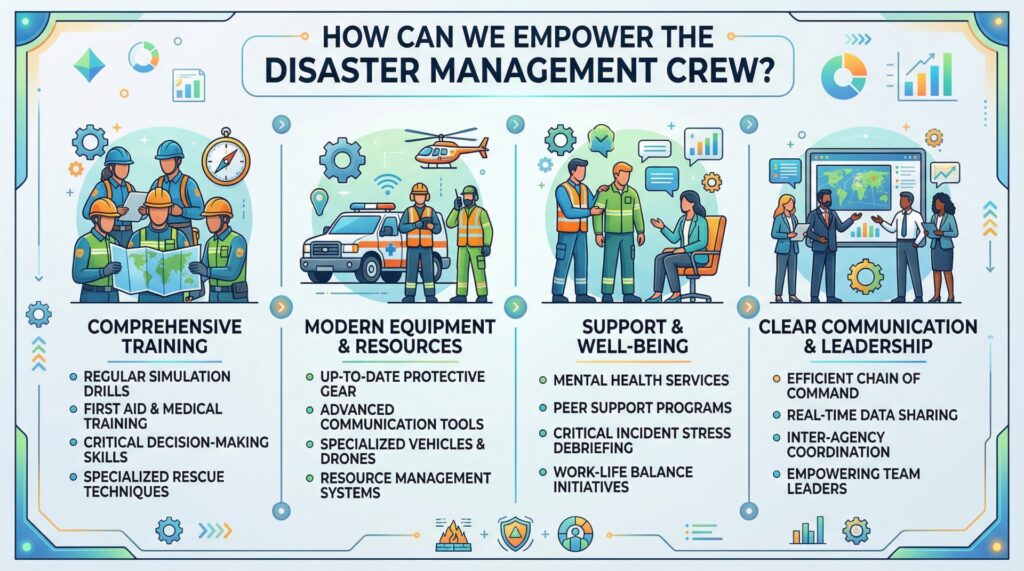
One of the most important parts of training is conducting regular emergency response drills. These drills help team members practice what to do during a real disaster. If they keep doing these exercises, they’ll get better and quicker at what they do! Practicing drills helps teams work better together and be super coordinated, which is really important when things get crazy! When everyone knows their role and responsibilities, the response becomes more organized and effective.
Special training is super important for helping disaster teams do their jobs better! This includes first aid training, search and rescue operations, and fire safety skills. First aid training helps team members give quick medical help to hurt people before the doctors get there. Search and rescue training shows them how to find and help people who are stuck under stuff or in really scary places! Fire safety training teaches them how to stop fires and keep everyone safe! The team has super cool skills that help them do a great job when there are all kinds of disasters!
Using pretend games and practicing real-life situations is super important too! Simulations create situations that are similar to real disasters, allowing team members to practice in a safe environment. This helps them understand how to react under pressure and make quick decisions. Training in real-life situations helps them get ready for surprises, making them better at solving problems and feeling more sure of themselves.
Yay! Continuous learning programs help disaster management teams get better and better all the time! New technologies, methods, and risks are always emerging, so it is important for teams to stay updated. Going to workshops, classes, and training helps them learn cool new stuff and get better at what they do! When teams get really good training and learn new skills, they can help people better during disasters and are always ready to save lives!
3. Access to Modern Equipment
Having cool tools is super important for helping teams deal with disasters and making sure they can help people really well when bad things happen. When bad things happen, every second counts, and having the right stuff can really help save people and keep things from getting worse. If you don’t have the right tools, even the best teams can have a hard time doing their jobs well. So, getting cool new technology and stuff is super important for making awesome teams that can help during disasters!
One of the super cool things is having awesome rescue tools and safety gear! People who help during disasters often go to really scary places, like buildings that have fallen down, areas with lots of water, or places where there are big fires. They need cool stuff like cutting tools, thermal cameras that see heat, life detectors to find people, and inflatable rescue boats to do their jobs safely and fast. Wearing stuff like helmets, gloves, boots, special clothes that don’t catch fire, and breathing masks is super important to keep the helpers safe too! When teams have all the right stuff, they can do their jobs better and stay safe from getting hurt!
Another cool thing is using awesome tech like drones, smart robots, and maps on computers to check things out and see how they are doing. Drones can fly high in the sky to look at places that got hurt by disasters. They help people see what got broken, find missing folks, and figure out how to help everyone safely without getting anyone else in trouble. AI can look at lots and lots of information super fast, guess when bad things might happen, and help people make choices. GIS technology helps teams draw maps of places that need help, keep an eye on supplies, and see what’s going on better. These cool tools give us super accurate and super fast info, which is super important when things get really scary!
Good communication systems are super important for handling disasters well. Sometimes, when really bad things happen, our phones and the internet might not work anymore. In these kinds of situations, satellite phones, walkie-talkies, and other cool emergency gadgets are super important! They help teams talk to each other, work together, and share cool news! Talking to each other helps make sure everything is used the right way, and that help gets to where it needs to go when it needs to be there.
4. Mental Health and Well-being Support
Disaster teams face difficult and terrifying situations, so helping people feel good is crucial. People have to deal with scary stuff, see others hurt, and make quick decisions when things turn bad. This can create worry, anxiety, and fatigue, as well as major mental health issues if it continues. Good mental health assistance is as vital as training and gear!
Helping people feel better with stress management methods is awesome! These fun workshops teach team members good stress management! Mindfulness, breathing exercises, and relaxation can reduce stress before and after procedures. Having frequent workshops and training sessions can assist educate staff cool methods to keep calm, focused, and balanced when things become tough! Strong minds help crisis management teams execute their tasks and make great decisions. Staying mentally healthy requires talking to someone and obtaining support for your feelings! Many team members may feel sad or terrified following a major disaster. The safe and loving environment of friendly counselors or psychologists lets kids express their feelings. This can help prevent major brain issues like depression or recurring nightmares. Super cool peer support programs! The team can share experiences and help each other. This can improve emotional power and link everyone.
During operations, proper rest cycles are crucial. Disaster response requires long hours and little sleep, which can drain you physically and mentally. Very weary people have trouble focusing, slow down, and make more mistakes. Teams can stay healthy and productive if organizations arrange good work schedules and allow enough time to rest and recharge! Rest is necessary for performance and safety.
Also, providing a comfortable location to work is incredibly vital for everyone to feel good! Leaders should certainly make it easy for everyone to communicate about mental health! It should be customary for teammates to express their feelings without judgment. Remembering and thanking disaster management personnel might motivate them to work hard. Mental health and well-being help strengthen disaster management teams! Responders’ mental and physical health depends on stress management programs, seeking help, and getting enough sleep. By emphasizing their well-being, organizations can keep these teams robust, focused, and ready to support communities in crisis.
5. Strong Leadership and Coordination
Having strong leaders and good teamwork is super important for helping disaster management teams do their best work! When a disaster happens, lots of people and teams need to team up, so it’s super important to have a system that helps everyone stay organized! If there’s no good leader, rescue work can get all mixed up, take forever, and not work as well. Awesome leaders make sure their teams stay on track, chill, and super ready to jump into action when things get tough. Having a clear command structure is super important for managing disasters! Everyone on the team needs to know who the boss is and what their job is! This helps keep things clear and saves time when things get crazy! When the right bosses give orders and everyone knows what they need to do, things get done quicker and everything is super organized! Having a clear plan makes it way easier for teams to talk to each other and get things done faster!
Inter-agency collaboration is also very important. When there’s a big disaster, the teams that help out really need backup from the police, military, hospitals, fire departments, and NGOs! Every team has its own cool talents and stuff to share! Like, police can help keep crowds in check, the military can give rides and help rescue people, and NGOs can bring food, places to stay, and help with medical stuff. When all these agencies work together, the response becomes stronger and more successful. Good coordination between them helps avoid duplication, delays, and misunderstandings.
Making smart choices really helps leaders be super strong! When disasters happen, you have to think fast and make smart choices because every second counts! Leaders need to collect info, figure out what’s going on, and make the smartest choices super quickly! When you use good communication and planning, it makes decision-making better and helps teams do things at the right time! Quick and smart choices can help people, fix problems, and make things better faster!
6. Policy and Government Support
Empowering disaster management crews requires policy and government support. These teams defend and save lives in risky and stressful situations. Without substantial government support, they struggle to accomplish their job. Disaster teams can respond swiftly with good planning, clear procedures, and enough government resources.
Government support relies heavily on budget allocation and funding. Rescue equipment, vehicles, communication networks, and training programs are needed for disaster management. All require money. Low budgets might prevent teams from having the equipment they need, slowing rescue operations and increasing dangers. Governments can strengthen emergency systems, store supplies, and educate staff with proper funds. This helps teams respond faster and better to calamities. Strong disaster management policies are crucial. Policies direct teams before, during, and after disasters. Good policies improve emergency planning, organization, and management. They also provide effective collaboration between police, hospitals, fire services, and rescue teams. Clear rules and plans reduce confusion and speed up and organize response. Policies that prioritize prevention and preparedness can mitigate disasters.
Disaster management worker insurance and compensation are crucial. When aiding others, these workers risk their lives. Operations can cause injury, illness, or death. Providing insurance gives them financial security and peace of mind. If something goes wrong, their families can get help. Pay, bonuses, and other incentives signal that the government honors their efforts and sacrifices. This boosts job motivation and dedication. Government help might also include current technology, infrastructure improvements, and public awareness activities. When the government and disaster management teams collaborate, a strong system is easier to build. Success requires planning and reaction support.
Ultimately, legislation and government assistance empower disaster management staff. Effective funding, procedures, and worker protection enable these teams to perform and stay safe. Governments invest in catastrophe management to protect their citizens.
10. Recognition and Motivation
It’s really cool when disaster management teams get recognized and feel motivated because it helps them do their best work ever! These awesome teams help people and keep communities safe when things get really scary! People don’t see how super hard these brave heroes work, even when they’re putting their lives on the line to keep everyone safe! Awesome and super cool people are really sure of themselves, work hard, and do amazing stuff! When workers feel excited and happy, they want to stay and give their all, even when things get really hard!
Cool rewards and fun ideas can totally boost disaster management, teams! If you do a great job, you can earn cool stuff like certificates, medals, or even money! When friends get high fives for doing an awesome job, they just want to keep it going! It makes everyone want to try their best, and that makes teamwork even better! Completing your training, being super brave, or dealing with tough stuff can lead to awesome rewards! These prizes tell everyone that what they do is super important! Getting recognized in public is super awesome for making people feel motivated! People really look up to disaster management workers when they get the recognition they deserve! Governments and groups can totally show off what they do with super cool events, awesome media coverage, and fun social campaigns! Even little things like saying thank you, giving out certificates, and handing out rewards can really make a big difference! When people get recognized for working really hard, it makes them super happy! Plus, it encourages others to jump in and help out with disaster management! It makes these teams look super awesome and makes everyone want to jump in and help.
11. Conclusion
To wrap it up, helping disaster management teams is super important for keeping people safe and making disasters less scary! Getting the right training, using cool tools, having help for feelings, good leaders, and support from the government are super important for making them better at what they do! When teams get recognized and feel motivated, it makes them want to stick together and work really hard! When disaster management teams are super ready and have all the help they need, they can jump into action really fast and do a great job when emergencies happen! Putting money into these places makes our neighborhoods better and tougher! It’s super important for governments, groups, and everyone to team up and help make disaster management teams stronger so we can have a safer future!
