

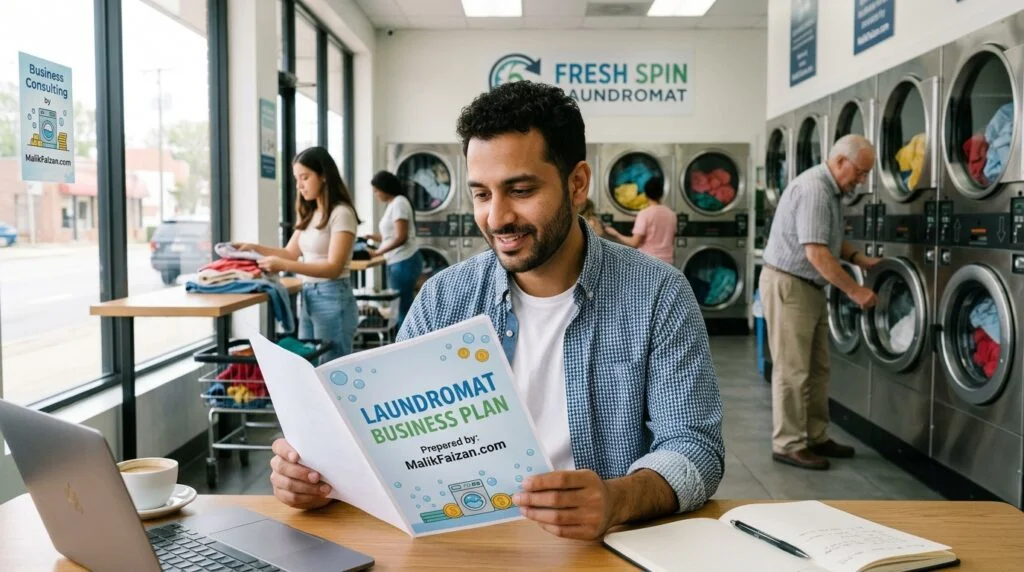
How to Open a Laundromat: Your Complete Guide to Starting a Successful Laundry Business
If you’re considering opening a laundromat, you already know it’s more than just washers and dryers in a room. You need a solid plan. But what’s involved in setting up your own laundromat business? From writing a comprehensive business plan and securing funding to selecting commercial laundry equipment and building a loyal customer base, here’s everything you need to know about how to start a laundromat.
Choose Your Laundromat Concept
So you’re wondering how to start a laundromat business? It all begins with a concept. Your laundromat concept is the foundation of your business: It defines your brand identity, services, atmosphere, and target audience. As you develop your concept, consider the following:
- Your facility’s design (modern and bright, eco-friendly, family-oriented)
- Specialized services you want to offer (wash-and-fold, dry cleaning pickup, commercial laundry services)
- Additional amenities you’d like to provide (free WiFi, vending machines, comfortable seating, kids’ play area)
Build Your Business with Tools That Move You Forward
Since your concept is what makes customers choose you over competitors, be sure to align it with both your personal goals and local demand. Conduct thorough market research to understand your target demographic, whether students, young families, renters, or apartment dwellers, and evaluate the residential density in your chosen laundromat location.
You’ll also want to choose a laundromat business model based on your goals for the business, your funding capabilities, and personal preference. Here are some options for how to set up a laundromat:
Laundromat franchise: If you don’t mind giving up some creative control to join an established brand, like Speed Queen or Tide Cleaners, in exchange for built-in name recognition and support, this might be the way to go. A laundromat franchise typically provides training, equipment guidelines, and proven operating systems.
Standalone business: For full creative freedom to create your own unique laundromat experience, develop your own independent facility where you control everything from branding to equipment selection.
Coin-operated laundromat: The traditional self-service model where customers pay per load, offering passive income with minimal staffing requirements.
Full-service laundromat: Combine self-service machines with wash-and-fold services, pickup and delivery, and possibly dry cleaning to attract busy professionals and families.
Commercial laundry service: Focus on business-to-business services, providing laundry solutions for hotels, restaurants, salons, gyms, and medical facilities. This model requires understanding what is a commercial laundry and the specific needs of business clients.
Hybrid laundromat: Combine laundry services with complementary businesses like a café, convenience store, or workout space to create additional revenue streams.
Create a Laundromat Business Plan
In order to be successful when you start a laundromat, you need to write a business plan that lays out your business objectives and the strategies you will use to start your laundromat business. Key sections of a laundromat business plan include:
Executive summary. Your executive summary should provide a top-line synopsis of your business — location, size, company ownership — as well as your laundromat’s objectives (or mission statement) and how you plan to meet them. Include whether you’re starting from scratch, buying an existing laundromat, or opening a franchise.
Industry overview. The laundry industry has shown remarkable resilience and steady growth, with the self-service laundry market valued at approximately $5 billion in the United States. It’s important to conduct industry research to ensure you understand your local market, laundromat industry growth trends, the demand for laundry services in your planned location, and the habits of your target customer. Your industry overview should also provide an assessment of key competitors in your market and what market gaps your laundromat could fill or emerging trends that your business could capitalize on.
Market analysis. To succeed, you’ll need a sound understanding of your market. Your market analysis should describe your target market, highlight your target market’s laundry habits and spending patterns, identify key factors that encourage laundromat usage (such as high rental rates, apartment complexes without in-unit laundry, or population density), and address any gaps in the industry that your laundromat can capitalize on. Organizing this information will give you strong objectives from the start and provide a reference point as your business grows.
Competitive analysis. Your competitive analysis should focus on your local environment and highlight current competitors, along with potential competitors who might enter the market. Determine your competitors’ strengths and weaknesses to uncover opportunities that give your laundromat a competitive advantage. Look at their equipment quality, cleanliness, hours of operation, pricing, and customer reviews.
Service line. Your service line includes the laundry services you intend to offer when you open a laundromat. This section should detail whether you’ll provide self-service only, add wash-and-fold services, offer pickup and delivery, include commercial laundry for businesses, or provide specialty services like comforter cleaning or shoe washing. Consider the equipment you’ll need for each service type.
Sales strategy. Use insights from your market and competitive analyses to outline a strategy to promote your laundromat services and your business as a whole. This section of your business plan may include traditional sales techniques and marketing tactics. It’s important to identify which sales data to track in order to determine whether your business is growing. Then focus on revenue forecasting from your services. Most forecasting should be done three years out so you can get a clear picture of your break-even point and profit potential. This can help you budget effectively when you start your laundromat.
Management plan. Managing your laundromat is key to growing your business, so take the time to create a management summary. It should include a layout of your management team (even if it’s just you initially), personnel responsibilities, staffing levels (many laundromats operate with minimal staff or are even unattended), and employee costs, such as wages, payroll, and training for any attendants or wash-and-fold staff.
Financial considerations. Now is the time to think about how to manage cash flow when opening a laundromat. You need to define your costs and how to finance your business in order to determine your average profits. A cash flow analysis can be extremely helpful with this part of the business plan. Include projections for utility costs (water, electricity, gas), maintenance expenses, and lease or mortgage payments.
Pro Tip:
Once you’ve drafted your laundromat business plan, crunch the numbers to estimate your monthly cash flow. This will help you determine when your laundromat will break even. For an even clearer picture, project your profits and losses over the first three years to see how your laundromat’s profitability can grow as you establish traction in the community. Many laundromat owners find their business reaches profitability within 18-24 months.
Obtain Licenses and Permits for Your Laundromat
After your laundromat business plan is in order, it’s time to consider the regulatory parameters of your business. Regulatory requirements will vary depending on where you operate, but here are compliance obligations you’ll definitely need to meet:
- Register your business with the IRS and obtain an Employer Identification Number (EIN).
- Obtain a general business license from your city or county government.
- Secure necessary environmental permits related to water discharge and wastewater management.
- Obtain building permits if you’re renovating or constructing your laundromat.
- Get zoning approval to ensure your location is approved for commercial laundry operations.
- Schedule inspections with local building, fire, and health departments before opening.
Research any state licenses and permits you may need before you start a laundromat. Many of these will be unique to your business and location, so make sure you consult an attorney to ensure you’ve covered all the bases.
You should also consider insurance coverage to protect you from unforeseen accidents at your laundromat. Here are a few types of insurance to look into:
General liability insurance will cover the costs of a claim or lawsuit if a customer is injured on your property, such as slipping on a wet floor.
Property insurance will protect your building, equipment, and inventory from damage due to fire, vandalism, or natural disasters. Given how much does an industrial washing machine cost, protecting your equipment investment is crucial.
Business interruption insurance will provide coverage if your laundromat must close temporarily due to covered damages, helping replace lost income during repairs.
Equipment breakdown insurance specifically covers the cost of repairing or replacing commercial washers and dryers when they malfunction outside of normal wear and tear.
Workers’ compensation protects both your business and your employees in the event one of your staff gets hurt while working, covering both medical expenses and lost wages.
Cyber liability insurance protects your business if you accept digital payments or store customer information, covering potential data breaches.
How Much Does It Cost to Open a Laundromat?
One of the most common questions aspiring owners ask is: how much does it cost to start a laundromat? Startup costs can vary significantly depending on your location, the size of your facility, whether you’re buying an existing business or starting from scratch, and the quality of equipment you choose.
According to industry data, the cost to open a laundromat typically ranges from $200,000 to $500,000, with some smaller operations starting for as little as $100,000 and larger, high-end facilities exceeding $1 million. The Coin Laundry Association reports that the average startup investment falls around $300,000.
When evaluating how much to start a laundromat, it’s important to budget for these cost categories:
Six Cost Factors to Consider When Starting a Laundromat
1. Commercial laundry equipment: This will be your largest expense. Industrial washing machines and commercial dryers are significant investments. How much does an industrial washing machine cost? A commercial front-load washer typically costs between $1,500 and $3,500 per machine, while high-capacity models can exceed $10,000. Commercial dryers range from $1,000 to $3,000 each. For a typical 2,000-square-foot laundromat, you might need 15-20 washers and 20-25 dryers, putting your equipment costs between $75,000 and $150,000 or more.
2. Location costs: Whether you’re leasing or purchasing property will dramatically affect your startup costs. Lease deposits typically require first and last month’s rent plus a security deposit. Monthly rent varies widely by market but can range from $2,000 to $10,000+ for a suitable space. If purchasing property, expect to make a down payment of 20-30% of the property value. Utility deposits for water, electricity, and gas can total $2,000-$5,000.
3. Renovation and buildout: Unless you’re buying a turnkey laundromat, you’ll need to invest in renovations. This includes plumbing for multiple water hookups, electrical work to support industrial equipment (often requiring 220-240 volt connections), HVAC systems, flooring that can handle water exposure, lighting, and exterior signage. Renovation costs can range from $25,000 to $100,000+ depending on the condition of your space.
4. Initial inventory and supplies: You’ll need to stock change machines with coins, purchase laundry carts, provide folding tables, stock vending machines, buy cleaning supplies, and provide initial supplies of detergent if you offer vending. Budget $5,000-$15,000 for initial inventory and supplies.
5. Technology and payment systems: Modern laundromats increasingly use card-based payment systems or mobile payment apps rather than just coins. A comprehensive payment system including card readers for each machine can cost $15,000-$40,000. You may also want to invest in security cameras ($2,000-$5,000), WiFi for customers ($500-$1,000 for setup), and a POS system for wash-and-fold services if applicable.
6. Marketing and grand opening: Promoting your laundromat costs money too. Budget for signage ($2,000-$10,000), initial advertising campaigns ($3,000-$10,000), grand opening promotions, and ongoing marketing efforts. First-year marketing budgets typically range from $5,000 to $20,000.
7. Working capital: Don’t forget to set aside 3-6 months of operating expenses as working capital to cover utilities, rent, payroll, and other costs while you build your customer base. This might require an additional $20,000-$50,000.
8. Permits, licenses, and legal fees: Budget $2,000-$5,000 for various permits, licenses, legal consultations, and business formation costs.
How Much to Open a Laundromat: Real-World Example
Here’s a breakdown of typical costs for opening a medium-sized laundromat:
- Equipment (15 washers, 20 dryers): $100,000
- Location (lease deposit + first 3 months): $15,000
- Renovation and buildout: $50,000
- Payment system and technology: $25,000
- Initial inventory and supplies: $8,000
- Marketing and signage: $10,000
- Working capital: $30,000
- Permits and legal: $3,000
Total: $241,000
This is why when people ask “how much does it cost to open a laundromat,” the answer typically falls in the $200,000-$300,000 range for a standard facility.
How to Buy a Laundromat
An alternative to starting from scratch is purchasing an existing laundromat. Learning how to buy a laundromat can help you skip many startup challenges and start generating income immediately. Here’s what you need to know:
Advantages of Buying an Existing Laundromat
- Immediate cash flow from an established customer base
- Proven location with existing foot traffic
- Equipment already installed and operational
- Existing lease agreements and vendor relationships
- Historical financial data to evaluate profitability
- Lower risk than a startup
Steps to Buy a Laundromat
1. Find laundromats for sale: Look for listings through business brokers, industry associations like the Coin Laundry Association, online marketplaces, or directly contact laundromat owners in your target area.
2. Evaluate the opportunity: Review financial statements for at least the past three years, analyze customer traffic patterns, assess equipment condition and age, evaluate the lease terms, research the neighborhood demographics, and understand why the owner is selling.
3. Conduct due diligence: Verify all financial claims, inspect all equipment thoroughly, review utility bills to understand operating costs, check for any pending legal issues or code violations, and talk to current customers if possible.
4. Determine fair market value: Laundromats typically sell for 3-5 times their annual net income. Have the business professionally appraised and consider the cost of any necessary equipment upgrades or renovations.
5. Secure financing: Banks are often more willing to finance existing laundromats with proven income than startups. Prepare your financing package with the business’s financial history.
6. Negotiate terms: Work with a business attorney to negotiate the purchase price, payment terms, transition period (where the seller helps you learn the business), and lease assignment or new lease terms.
7. Close the deal: Complete all legal paperwork, transfer licenses and permits, take possession of the business, and plan your ownership transition.
What to Watch Out For
When learning how to buy a laundromat, beware of these red flags:
- Declining revenue trends
- Very old equipment requiring immediate replacement
- Lease issues or upcoming rent increases
- Deferred maintenance problems
- Neighborhood in decline
- Overstated income (always verify independently)
Obtain Funding for Your Laundromat
Whether you’re starting fresh or buying an existing business, understanding how to start a laundromat business includes securing adequate funding. The costs of opening a laundromat can be a major barrier to entry for some aspiring owners. However, even if you don’t have funds of your own, you may be able to take advantage of a variety of financing options:
Small Business Administration (SBA) loans are among the best options for laundromats. SBA 7(a) loans can provide up to $5 million for equipment, real estate, and working capital with favorable terms and lower down payments than conventional loans.
Traditional bank loans are available for qualified borrowers with good credit and adequate collateral. Banks may offer equipment financing specifically for commercial washers and dryers, often using the equipment itself as collateral.
Equipment financing allows you to spread the cost of expensive commercial laundry machines over time. Given how much does an industrial washing machine cost, equipment financing can preserve your cash flow. Lenders may finance 80-100% of equipment costs with terms of 3-7 years.
Commercial real estate loans are available if you’re purchasing the property for your laundromat rather than leasing. These typically require 20-30% down payment with 15-20 year terms.
Business lines of credit offer flexible financing where you can borrow funds up to a predetermined limit, repay, and reuse the credit as needed, typically with interest only on the amount you withdraw. This can be useful for managing cash flow or covering unexpected repairs.
Seller financing may be available when you buy an existing laundromat. The seller essentially acts as the bank, allowing you to make payments over time. This can reduce your upfront capital needs.
Investors or partners can provide capital in exchange for equity in your business. This reduces your personal financial risk but means sharing ownership and profits.
Personal savings and retirement funds can be used, though this carries more personal risk. Some entrepreneurs use Rollover for Business Startups (ROBS) to access retirement funds without penalties.
Crowdfunding for your business allows you to raise capital by collecting small contributions from a large number of people, typically via online platforms, though this is less common for laundromats than for consumer-focused businesses.
Typical Financing Structure
Many laundromat owners use a combination of financing sources. A typical structure might look like:
- Personal investment: 20-30% ($60,000-$90,000 on a $300,000 project)
- SBA loan or bank loan: 50-60% ($150,000-$180,000)
- Equipment financing: 20-30% ($60,000-$90,000)
Choose a Laundromat Location
When you’re looking for the best location for opening a laundromat, cost might be your biggest driver. Cheaper rent and utilities might sound great when you first start, but choosing a location solely on price can be detrimental in the long term. The location of your laundromat can make or break your business, and there are specific factors that determine the best location for your laundromat.
Key Location Factors for Laundromat Success
Demographics: Look for areas with high percentages of renters, apartment complexes without in-unit laundry, college students, young families, and lower to middle-income households. Population density is crucial—you need enough potential customers within a 0.5-1 mile radius.
Competition: Analyze existing laundromats in the area. How many are there? What’s their condition? What hours do they operate? What services do they offer? Ideally, you want to be in an underserved area, but some competition indicates proven demand.
Visibility and accessibility: Your laundromat should be easily visible from main roads, accessible by car with adequate parking (customers carry heavy laundry), and ideally accessible by public transportation since many customers may not own vehicles.
Foot traffic: Consider locations near apartment complexes, student housing, busy retail areas, or neighborhoods where people naturally pass by. Being located in a shopping center with complementary businesses can drive traffic.
Space requirements: A typical laundromat requires 1,200-3,500 square feet depending on your business model. Ensure adequate space for:
- Rows of washers and dryers with customer flow space
- Folding tables
- Seating area
- Change machine and vending
- Wash-and-fold service area (if applicable)
- Storage for supplies
- Customer bathroom (recommended)
Utilities infrastructure: This is critical. Your location must have:
- Adequate water supply and drainage (often requiring 2-3 inch water lines)
- Sufficient electrical capacity (commercial laundry equipment requires significant power)
- Gas lines if using gas dryers (more energy-efficient than electric)
- Proper ventilation for dryer exhaust
Parking: Customers need convenient parking. Plan for at least 1 parking space per 2-3 washers.
Questions to Ask About a Potential Location
When evaluating a space, ask these questions:
What types of businesses have operated here in the past? Find out whether laundromats have ever operated in the space. If previous laundromats failed there, understand why before proceeding.
Can the utilities support a laundromat? Have a plumber and electrician evaluate whether the existing infrastructure can support commercial laundry equipment or what upgrades would be needed. This can add tens of thousands to your costs if major work is required.
What are the restrictions on remodeling? Some commercial landlords prohibit renovations of any kind, or require you to restore the space to original condition when you leave. Understand these terms before signing.
What is the minimum lease requirement? Commercial laundromat leases typically run 5-10 years given the investment required. Negotiate renewal options to protect your investment. Also ask about rent increases—are they fixed, tied to CPI, or at landlord’s discretion?
What insurance coverage does the lease require? Commercial landlords require certain insurance. While exact requirements vary by state, the most common types needed are general liability, commercial property, and workers’ compensation insurance. Make sure the requirements are reasonable before committing.
Do I owe the landlord a share of my sales? Some commercial leases require percentage rent—you pay base rent plus a percentage of gross sales above a certain threshold. This is less common for laundromats but should be understood and negotiated.
What’s included in the lease? Clarify whether utilities are included (usually not for laundromats given high usage), who handles exterior maintenance, snow removal, parking lot upkeep, and property insurance.
Who are the neighboring tenants? Complementary businesses like grocery stores, fitness centers, or coffee shops can drive traffic to your laundromat. Avoid locations next to businesses that might deter customers.
Design Your Laundromat Layout
An efficient laundromat layout benefits both customers and staff, ensuring smooth operations and a welcoming atmosphere. Elements like equipment placement, traffic flow, and amenity positioning all play key roles. A well-thought-out layout starts with understanding the basics of creating a laundromat floor plan, then adapting it to your shop’s unique concept and customer needs.
Front of House Layout
The customer-facing area shapes the experience, so it should balance functionality and comfort:
Equipment arrangement: Arrange washers and dryers in rows with adequate space between (typically 4-6 feet) for customers to move carts and access machines comfortably. Group machines by capacity—have a section for regular washers, a section for large-capacity washers for comforters and bulky items, and a section for dryers.
Traffic flow: Design your layout so customers naturally flow through the space without congestion. Entry should lead to washers, then dryers, then folding area. Avoid dead ends.
Folding stations: Provide ample folding tables (aim for 1 linear foot of folding space per washer). Position them centrally so customers can watch their dryers while folding.
Seating area: Comfortable seating encourages customers to stay rather than leave and return. Include a mix of individual chairs and bench seating. Position seating with clear sightlines to machines.
Amenities placement: Position change machines, soap vending, and payment kiosks near the entrance for convenience. Place laundry cart storage by the door. If offering coffee, TV, or kids’ play area, position these to keep customers comfortable during wait times.
Lighting: Bright, even lighting makes the space feel clean and safe. Use LED lighting for energy efficiency. Well-lit facilities attract more customers, especially during evening hours.
Décor and atmosphere: Clean, fresh paint in welcoming colors makes a big difference. Consider your brand—modern and minimalist, family-friendly and bright, or eco-conscious and natural. Keep floors spotless and provide adequate trash and recycling bins.
Back of House Layout (If Offering Full-Service)
If you’re offering wash-and-fold or commercial laundry services, you’ll need a back-of-house area:
Receiving area: Space for customers to drop off laundry with a counter and scale for weighing.
Sorting stations: Tables or bins for sorting laundry by color, fabric type, and customer.
Equipment area: Additional commercial washers and dryers dedicated to service laundry, separate from customer self-service machines.
Folding and packaging area: Clean, dedicated space for folding finished laundry and packaging it for customer pickup.
Storage: Shelving for detergents, supplies, and finished orders awaiting pickup.
Staff area: Small space for employees to take breaks, store personal items, and access equipment.
Accessibility Considerations
Ensure your laundromat is ADA compliant:
- At least one accessible entrance with appropriate door width
- Accessible path to all public areas
- Front-loading washers at accessible height
- Folding tables at varied heights
- Accessible bathroom if you provide one
- Appropriate spacing between machines for wheelchair access
Order Equipment for Your Laundromat
Stocking your laundromat with the right equipment is key to running smoothly from day one. While every laundromat is different, most will need a mix of washers, dryers, and ancillary equipment. A well-prepared equipment list ensures your operations run efficiently and customers have a positive experience.
Commercial Washing Machines
Types of commercial washers:
- Top-load washers: More affordable but less efficient and harder on clothes. Less common in modern laundromats.
- Front-load washers: Industry standard. More energy and water efficient, gentler on clothes, better cleaning performance. Available in various capacities.
- High-efficiency (HE) washers: Use significantly less water and energy, important for controlling operating costs.
Capacity range: Offer variety to serve different customer needs:
- Small capacity (20 lbs): For regular loads
- Medium capacity (30-40 lbs): Most versatile for typical loads
- Large capacity (50-60 lbs): For comforters and bulky items
- Extra-large capacity (80+ lbs): For very large items or customers doing many loads at once
Top commercial washer brands:
- Speed Queen (industry leader, known for durability)
- Maytag Commercial
- Dexter
- Huebsch
- Electrolux Professional
How much does an industrial washing machine cost? Prices vary by size and features:
- 20 lb capacity: $1,500-$2,500
- 30-40 lb capacity: $2,500-$4,500
- 50-60 lb capacity: $4,500-$7,000
- 80+ lb capacity: $7,000-$12,000+
Washer features to consider:
- Programmable controls for different fabric types
- Card/mobile payment compatibility
- Energy Star certification for efficiency
- Warranty length and local service availability
- Water and energy usage per cycle
- Cycle time (faster cycles mean more revenue potential)
Commercial Dryers
Types of commercial dryers:
- Gas dryers: More energy-efficient and lower operating costs, but require gas line infrastructure
- Electric dryers: Higher operating costs but easier to install without gas lines
- Stack dryers: Save floor space by stacking two dryers vertically
Capacity considerations: Generally want 1.5-2x dryer capacity compared to washer capacity since clothes need more space to dry and drying takes longer than washing. For every washer, plan for 1.5 dryers.
Dryer brands: Similar to washers—Speed Queen, Maytag Commercial, Dexter, Huebsch.
Dryer costs: Commercial dryers typically cost $1,000-$3,000 depending on size and whether gas or electric.
Payment Systems
Modern laundromats are moving away from coin-only systems:
Coin-operated: Traditional system. Requires change machines. More maintenance and security concerns with cash collection. Still expected by some customers.
Card systems: Customers purchase laundry cards and add value, then use cards to activate machines. Reduces cash handling. Track customer usage. Value cards can be reloaded.
Mobile payment apps: Customers pay via smartphone app. Convenient and modern. Appeals to younger demographics. Provides customer data.
Hybrid systems: Offer multiple payment options (coins, cards, mobile) to accommodate all customer preferences.
Payment system costs: $300-$1,500 per machine for card/mobile systems, plus central management system.
Essential Additional Equipment
Change machines: If accepting coins, you need reliable change machines. Budget $2,000-$3,500 per machine.
Laundry carts: Provide free carts for customer convenience. Commercial laundry carts cost $80-$150 each. Plan for 1 cart per 2-3 washers.
Folding tables: Sturdy commercial folding tables, typically 8 feet long. Budget $200-$400 per table.
Vending machines: Offer detergent, fabric softener, dryer sheets, and snacks. Can generate additional revenue. New vending machines cost $2,000-$4,000 each, or lease them.
Seating: Commercial-grade chairs and benches. Budget $100-$300 per seat.
Security cameras: Essential for deterring theft and vandalism. A comprehensive system costs $2,000-$5,000.
Television: Provides entertainment during wait times. Budget $300-$800.
WiFi system: Free WiFi is increasingly expected. Commercial WiFi setup costs $500-$1,000.
Water heaters: May need commercial water heaters depending on building infrastructure. Cost varies widely.
HVAC system: Climate control keeps customers comfortable. Laundromats generate significant heat from dryers.
Wash-and-fold equipment (if offering service):
- Commercial scales for weighing laundry
- Sorting bins
- Packaging supplies
- Additional washers/dryers for service operations
New vs. Used Equipment
New equipment advantages:
- Latest efficiency standards (lower utility costs)
- Full manufacturer warranty
- Modern payment system compatibility
- Expected lifespan of 10-15+ years
Used equipment advantages:
- 50-70% cost savings
- Immediate availability
- Can be a good option when buying an existing laundromat
Used equipment considerations:
- Verify condition thoroughly
- Understand remaining useful life
- Factor in potential repair costs
- Limited or no warranty
- May lack modern features
- Higher utility costs if older and less efficient
Equipment Financing
Given how much an industrial washing machine costs, most owners finance equipment:
- Equipment loans specifically for commercial laundry equipment
- Lease-to-own programs from equipment manufacturers
- Include equipment costs in your overall SBA or bank loan
Choose a Laundromat Point of Sale (POS) System
The right laundromat POS software provides numerous benefits to your business. By streamlining your payment process, managing wash-and-fold services, and providing customer insights, a full-solution POS system helps increase revenue and operational efficiency.
Laundromat POS Must-Haves
Payment processing capabilities: Ensure your POS can integrate with your laundry equipment payment systems, whether card-based, mobile, or coin. For wash-and-fold services, you need reliable payment processing for credit cards, debit cards, contactless payments, and mobile wallets.
Wash-and-fold management: If offering full-service laundry, your POS should track:
- Customer orders and preferences
- Weight-based pricing
- Service status (received, washing, drying, folding, ready for pickup)
- Customer notification system
- Ticket printing for tracking
Inventory management: Track:
- Vending machine inventory (detergent, snacks)
- Cleaning supplies
- Supplies for wash-and-fold (hangers, bags, detergent)
- Equipment maintenance needs
Reporting and analytics: Look for systems that provide:
- Daily, weekly, monthly revenue reports
- Peak usage times to optimize staffing
- Service type breakdown (self-service vs. wash-and-fold)
- Customer retention metrics
- Equipment usage statistics
Customer relationship management: Features to build customer loyalty:
- Customer database with contact information
- Purchase history
- Loyalty rewards programs
- Email and SMS marketing integration
- Birthday or promotional offers
Multi-location management: If you plan to expand to multiple laundromats, choose a POS that can manage multiple locations from a central dashboard.
User-friendly interface: Your staff needs to process wash-and-fold orders quickly and accurately, so intuitive design is essential.
Cloud-based access: Monitor your business remotely, access reports from anywhere, and ensure data is backed up automatically.
Hardware compatibility: Works with standard POS hardware like tablets, receipt printers, cash drawers, and barcode scanners.
Payment Features to Look For
Multiple payment methods: Accept credit cards, debit cards, contactless payments (Apple Pay, Google Pay, Samsung Pay), and cash.
Secure processing: PCI-compliant payment processing to protect customer data.
Fast processing: Quick authorization and settlement to keep lines moving during busy times.
Tipping option: If you offer full-service wash-and-fold, enable customers to tip your staff easily.
Pricing flexibility: Ability to set different prices for:
- Weight-based wash-and-fold
- Per-item pricing for specialty items
- Rush service upcharges
- Commercial account pricing
Recommended POS Systems for Laundromats
While there are many options, look for POS systems that specifically accommodate laundry services or retail/service hybrid businesses:
Square for Retail: Versatile, affordable, and user-friendly with excellent payment processing and basic inventory management.
Clover: Comprehensive system with strong payment processing and customizable for service businesses.
Toast or Lightspeed: Originally designed for restaurants, these adapt well to service-based businesses with inventory needs.
LaundroLab or Cents: Specialized laundry management software that integrates with equipment and payment systems.
Hire Staff for Your Laundromat
One advantage of the laundromat business is that it can operate with minimal staff, or even be fully unattended with remote monitoring. However, having attendants can significantly improve customer experience, increase security, and enable you to offer full-service options.
Staffing Models
Unattended laundromat:
- No on-site staff during operating hours
- Owner monitors remotely via security cameras
- Automated payment systems
- Customer service via posted phone number
- Lowest labor costs but limited service offerings
- Best for: Smaller laundromats in low-crime areas
Part-time attendant:
- Staff present during peak hours (evenings and weekends)
- Assists customers, maintains cleanliness, handles minor issues
- Moderate labor costs with improved customer experience
- Best for: Medium-sized laundromats wanting some presence without full coverage
Full-time attendant:
- Staff present during all operating hours
- Provides customer service, maintains facility, monitors equipment
- Higher labor costs but better customer experience and security
- Enables wash-and-fold services
- Best for: Larger laundromats or those in competitive markets
Full-service staffing:
- Multiple employees to handle wash-and-fold, pickup/delivery, and customer service
- Highest labor costs but highest revenue potential
- Best for: Laundromats focused on full-service offerings
Positions to Consider
Laundromat attendant:
- Monitors facility and equipment
- Assists customers with machine operation
- Makes change
- Maintains cleanliness
- Handles minor customer issues
- Reports maintenance needs
Wash-and-fold staff:
- Receives customer drop-offs
- Sorts, washes, dries, and folds laundry
- Packages finished orders
- Processes payments
- Maintains quality standards
Pickup and delivery drivers:
- Collects laundry from customer locations
- Delivers finished laundry
- Processes payments
- Represents your brand professionally
Manager (for larger operations):
- Oversees daily operations
- Manages staff scheduling and payroll
- Handles vendor relationships
- Monitors financial performance
- Addresses customer complaints
- Coordinates maintenance and repairs
Hiring Tips
Look for these qualities:
- Reliability and punctuality (essential for maintaining hours)
- Customer service orientation
- Honesty (they’ll handle cash and customer belongings)
- Attention to detail (especially for wash-and-fold)
- Basic troubleshooting skills
- Comfort working independently
Competitive wages: Laundromat attendants typically earn $11-$15 per hour depending on location and experience. Offering slightly above-market wages can help attract reliable staff and reduce turnover.
Clear job descriptions: Outline specific responsibilities and expectations in writing.
Proper training: Even for seemingly simple tasks, provide thorough training on:
- Equipment operation and troubleshooting
- Customer service standards
- Safety procedures
- Cash handling and payment processing
- Cleaning protocols
- Emergency procedures
Background checks: Given that staff will have access to customer belongings and potentially work alone, conduct appropriate background screening.
Labor law compliance: Ensure you follow all federal and state labor laws regarding:
- Minimum wage
- Overtime pay
- Break requirements
- Workers’ compensation insurance
- Payroll taxes
Market Your Laundromat
To attract customers and build a loyal base, you need a strategic marketing approach that combines traditional community engagement with modern digital tactics.
Local Marketing Strategies
Grand opening promotion: Generate buzz with special offers like:
- First wash free
- Discounted wash days during opening week
- Free detergent samples
- Prize drawings for gift cards or free washes
Community partnerships: Build relationships with:
- Apartment complex managers (offer resident discounts)
- College housing offices
- Property management companies
- Local businesses (cross-promote)
- Senior centers
- Community organizations
Direct outreach: Distribute flyers or door hangers to:
- Nearby apartment buildings
- Student housing
- Neighborhoods without in-unit laundry
Traditional advertising:
- Local newspaper ads
- Community bulletin boards
- Local radio (especially in markets with ethnic stations matching your demographics)
- Direct mail to nearby households
Vehicle signage: If offering pickup and delivery, use vehicle wraps as mobile advertising.
Digital Marketing for Laundromats
Google Business Profile: This is crucial for local discovery:
- Claim and verify your listing
- Add accurate hours, location, and contact information
- Upload photos of your clean, modern facility
- Encourage satisfied customers to leave reviews
- Respond professionally to all reviews
- Post updates about promotions or services
Social media presence:
- Facebook: Create a business page to share hours, services, promotions, and community involvement. Join local community groups and contribute helpfully (without spamming).
- Instagram: Share photos of your facility, before/after wash-and-fold results, customer testimonials, and behind-the-scenes content.
- Nextdoor: Engage with your immediate neighborhood, answer questions, and build local trust.
Simple website: Even a basic one-page website helps customers find:
- Your location and hours
- Services offered (self-service, wash-and-fold, pickup/delivery)
- Pricing
- Payment methods accepted
- Contact information
- Special features (free WiFi, TV, loyalty program)
Local SEO: Optimize your online presence for searches like “laundromat near me”:
- Include location keywords in your website content
- Ensure consistent business name, address, and phone number (NAP) across all online directories
- Get listed in local business directories
- Earn backlinks from local sources
Email and SMS marketing: Build a customer database and send:
- Promotional offers
- Loyalty rewards
- Reminders for regular customers
- Service updates
Customer Retention Strategies
Acquiring a new customer costs 5-10 times more than retaining an existing one, so focus on loyalty:
Loyalty programs:
- Punch cards (every 10th wash free)
- Points-based rewards system
- VIP memberships with discounts
- Referral bonuses for bringing new customers
Excellent customer service:
- Keep facility spotlessly clean
- Maintain equipment promptly
- Respond quickly to issues
- Be friendly and helpful
Convenience features:
- Extended hours (many successful laundromats operate 24/7)
- Free WiFi
- Comfortable seating
- Entertainment (TV, music)
- Coffee or vending
Quality services:
- Well-maintained, modern equipment
- Fast wash/dry cycles
- Good water temperature and pressure
- Excellent cleaning results
Regular communication:
- Announce new machines or services
- Share maintenance schedules
- Offer seasonal promotions (back-to-school, spring cleaning)
Competitive pricing: While not necessarily the cheapest, ensure your prices represent good value for the quality and convenience you provide.
Measuring Marketing Effectiveness
Track which marketing efforts drive results:
- Ask new customers how they heard about you
- Use unique coupon codes for different campaigns
- Monitor Google Business Profile insights
- Track social media engagement
- Measure website traffic sources
- Calculate customer acquisition cost per channel
Understanding Commercial Laundry Services
Many laundromat owners wonder: what is a commercial laundry? Commercial laundry refers to providing laundry services to businesses rather than individual consumers. This can be a lucrative revenue stream in addition to or instead of self-service laundromat operations.
Types of Commercial Laundry Clients
Hospitality industry:
- Hotels and motels (towels, linens, robes)
- Bed and breakfasts
- Vacation rentals (Airbnb, VRBO)
Food service industry:
- Restaurants (tablecloths, napkins, chef coats)
- Catering companies
- Food trucks
Healthcare facilities:
- Medical offices (lab coats, towels)
- Dental offices
- Veterinary clinics
- Senior care facilities
Personal care businesses:
- Hair salons and barbershops (towels, capes)
- Nail salons
- Spas and massage studios
- Tanning salons
Fitness facilities:
- Gyms (towels)
- Yoga studios
- Sports teams
Other businesses:
- Auto repair shops (shop towels)
- Cleaning companies (microfiber cloths, mop heads)
- Manufacturing facilities (uniforms)
Commercial Laundry Service Models
Pickup and delivery: You collect soiled laundry from the business, process it at your facility, and return it clean and folded/hung.
Drop-off service: Businesses bring their laundry to your facility and pick it up when complete.
Rental programs: For items like towels or linens, you own the inventory and exchange clean items for soiled ones on a regular schedule. Businesses pay a per-item fee.
Advantages of Commercial Laundry
- Predictable, recurring revenue through contracts
- Higher volume per customer than individual consumers
- Often less price-sensitive than individual consumers
- Daytime business that can fill slower periods
- Stable relationships—businesses need consistent service
Challenges of Commercial Laundry
- Requires significant additional equipment capacity
- Needs dedicated staff to manage operations
- Must meet business schedules (quick turnaround times)
- Quality consistency is critical (businesses won’t tolerate mistakes)
- Billing and invoicing overhead
- Transportation costs for pickup/delivery
Starting a Commercial Laundry Service
Equipment needs: Commercial clients require significant capacity. You’ll need industrial-sized washers (60-80+ lb capacity) and high-volume dryers.
Dedicated space: Separate your commercial operations from self-service to maintain efficiency and prevent conflicts.
Pricing strategy:
- Per-pound pricing for most items
- Per-piece pricing for uniforms or specialty items
- Contract pricing with volume discounts
- Price competitively but ensure profitability
Quality systems:
- Sorting and tracking systems to prevent mix-ups
- Standardized washing procedures
- Quality inspections
- Stain treatment protocols
Contracts: Use written service agreements specifying:
- Services provided
- Pickup/delivery schedules
- Pricing and payment terms
- Quality standards
- Liability limitations
- Termination procedures
Marketing to businesses:
- Direct outreach to target businesses
- Professional website showcasing commercial services
- Testimonials from satisfied business clients
- Highlight reliability, quality, and convenience
What Is the Average Revenue for a Laundromat?
Understanding potential revenue helps you set realistic expectations and plan financially. Laundromat revenue varies widely based on location, size, equipment, services offered, and hours of operation.
Self-Service Laundromat Revenue
According to the Coin Laundry Association, the average self-service laundromat generates approximately $15,000-$30,000 per month in gross revenue, or $180,000-$360,000 annually. High-performing laundromats in excellent locations can exceed $500,000 in annual revenue.
Revenue factors:
- Number of machines: More machines mean more capacity and revenue potential. A typical laundromat has 15-30 washers and 25-40 dryers.
- Turn rate: How many times per day each machine is used. Peak efficiency is 4-6 turns per day.
- Average transaction: Customers typically spend $5-$12 per visit depending on load size and number of loads.
- Operating hours: 24/7 operations capture more business than limited hours.
- Location: High-traffic urban areas generate significantly more revenue than rural locations.
Additional Revenue Streams
Smart laundromat owners diversify income:
Vending machines: Detergent, fabric softener, snacks, and beverages can add $200-$500+ monthly.
Wash-and-fold service: Can generate $3-$8 per pound. A laundromat processing 500 lbs per week at $1.50/lb nets $39,000 annually from this service alone.
Pickup and delivery: Premium pricing (typically $1.75-$2.50 per pound) for convenience.
Commercial accounts: Steady revenue from business clients.
Drop-off dry cleaning: Partner with a dry cleaner; you collect and return items for a commission.
Laundry supplies sales: Sell detergent, dryer sheets, stain removers at retail markup.
ATM machine: Earn commission on transactions (if you allow one on-site).
Operating Expenses
Revenue is only part of the equation. Typical operating expenses include:
Utilities: 25-35% of revenue
- Water and sewer
- Electricity or gas for dryers
- Heating/cooling
Rent: 10-15% of revenue (or mortgage if you own the property)
Equipment maintenance and repairs: 5-10% of revenue
Labor: 10-25% of revenue (depending on staffing model)
Supplies: 2-5% of revenue
Insurance: 2-3% of revenue
Marketing: 2-5% of revenue
Miscellaneous: 3-5% of revenue (pest control, landscaping, etc.)
Total operating expenses: Typically 65-85% of gross revenue
Profitability
After operating expenses, well-run laundromats typically achieve:
- Net profit margin: 15-35% of gross revenue
- Annual owner income: $30,000-$100,000+ depending on size and efficiency
- Return on investment (ROI): 15-30% annually
Example: A laundromat generating $250,000 in annual revenue with 70% operating expenses would yield $75,000 in net profit (30% margin). If the initial investment was $300,000, that’s a 25% annual ROI.
How Much Does It Cost to Do Laundry at a Laundromat?
Understanding customer perspective helps you price competitively. So, how much does it cost to do your laundry at a laundromat?
Typical Laundromat Pricing
Washers:
- Small/regular load (20-25 lbs): $2.50-$4.50
- Medium load (30-40 lbs): $4.00-$6.50
- Large load (50-60 lbs): $6.00-$9.00
- Extra-large load (80+ lbs): $8.00-$12.00
Dryers:
- Typically $0.25-$0.50 per 10-12 minutes
- Full drying cycle usually requires 30-60 minutes
- Total drying cost: $1.00-$3.00 per load
Average visit: A typical customer doing 2-3 loads of laundry spends $8-$15 per visit, including washing and drying.
Frequency: Most customers visit weekly or biweekly.
Monthly cost: For someone doing all their laundry at a laundromat: $35-$60 per month.
Value-Added Services Pricing
Wash-and-fold:
- $1.25-$2.00 per pound
- Minimum order often 10-20 lbs
- Average customer order: $20-$40
Pickup and delivery:
- Same per-pound pricing as wash-and-fold plus:
- Delivery fee: $3-$10 per order
- Or premium per-pound pricing: $1.75-$2.50/lb
Comforter/bulky items:
- Often priced per item: $15-$35 per comforter
Comparison to Home Laundry
Doing laundry at home costs approximately:
- $0.50-$1.25 per load for water, electricity/gas, and detergent
- Plus amortized cost of washer/dryer purchase ($500-$1,500)
- Plus maintenance and repairs
However, laundromats offer advantages that justify the premium:
- No equipment purchase required
- No space needed in home
- Larger capacity machines (do all laundry in one trip)
- Faster turnaround (multiple loads simultaneously)
- No maintenance responsibilities
- Can do other activities during wash/dry time (WiFi, entertainment)
Laundromat Business: Key Considerations
Advantages of Owning a Laundromat
Recession-resistant: People always need clean clothes regardless of economic conditions. Laundromats actually see increased business during recessions as people cut costs and move to apartments.
Cash business: Strong cash flow from day one if you buy an existing laundromat or once established if starting new.
Scalable: Can start small and expand, or own multiple locations.
Flexible hours: Unattended laundromats can operate 24/7 without requiring you to be present. Even attended models offer flexibility.
Simple business model: Straightforward operations compared to many other businesses.
Growing market: As more housing becomes rental units without in-unit laundry, demand remains strong.
Multiple revenue streams: Self-service, wash-and-fold, commercial accounts, vending all contribute.
Relatively passive: Particularly unattended models require less day-to-day involvement than many businesses.
Asset-backed: Equipment has resale value if you decide to exit the business.
Challenges of Owning a Laundromat
High upfront costs: Significant capital required to start, particularly for equipment.
Equipment maintenance: Commercial washers and dryers require regular maintenance and occasional repairs.
Utility costs: Water, electricity, and gas bills can be substantial and cut into margins.
Competition: Mature industry with established competitors in most areas.
Customer behavior: Dealing with customers who may misuse equipment, leave messes, or stay past closing.
Theft and vandalism: Unattended facilities are vulnerable, requiring security systems.
Regulatory compliance: Environmental regulations regarding water discharge, wastewater, and energy efficiency.
Market dependent: Success heavily depends on choosing the right location with appropriate demographics.
Economic sensitivity: While recession-resistant overall, local economic downturns or demographic shifts can impact revenue.
Success Factors
Location: This is the single most important factor. Demographics, visibility, parking, and competition all matter tremendously.
Equipment quality: Invest in reliable, efficient machines. Downtime costs you revenue and frustrates customers.
Cleanliness: An immaculate facility attracts and retains customers. Budget time and/or money for daily cleaning.
Customer service: Whether through staff or responsive ownership, excellent service creates loyalty.
Modern amenities: WiFi, comfortable seating, entertainment, and convenient payment options meet customer expectations.
Competitive pricing: Balance profitability with value. Being perceived as expensive drives customers away.
Marketing: Proactive customer acquisition and retention strategies keep revenue growing.
Operational efficiency: Minimize utility costs through efficient equipment and practices. Optimize pricing and turns.
Adaptability: Successful owners evolve their services (adding wash-and-fold, pickup/delivery, commercial accounts) as markets change.
How to Open a Laundromat: FAQs
How much does it cost to open a laundromat?
The cost to start a laundromat typically ranges from $200,000 to $500,000, with smaller operations potentially starting for $100,000-$150,000 and larger, high-end facilities exceeding $1 million. Major cost categories include commercial laundry equipment ($75,000-$150,000+), location costs (lease deposits and initial rent or property purchase), renovations and buildout ($25,000-$100,000+), payment systems and technology ($15,000-$40,000), initial supplies and inventory ($5,000-$15,000), marketing and signage ($5,000-$20,000), and working capital ($20,000-$50,000). The exact amount depends on your location, the size of your facility, whether you’re starting from scratch or buying an existing business, and the quality of equipment you choose.
How profitable is a laundromat?
A well-run laundromat can achieve 15-35% net profit margins. Average annual revenue for a self-service laundromat ranges from $180,000 to $360,000, with high-performing locations exceeding $500,000. After operating expenses (typically 65-85% of revenue), owners can expect annual net income of $30,000-$100,000+ depending on size, location, and efficiency. Return on investment typically ranges from 15-30% annually. Profitability depends on factors like location, foot traffic, operational efficiency, utility costs, and whether you offer value-added services like wash-and-fold or commercial accounts. The laundromat business is considered recession-resistant since people always need clean clothes.
How much money do I need to start a laundromat?
To start a laundromat, you’ll typically need $200,000-$500,000 in total capital, though this varies based on your specific situation. Most owners don’t have this entire amount in cash—they use a combination of personal investment (typically 20-30%, or $60,000-$90,000) and financing (70-80% through SBA loans, bank loans, or equipment financing). A smaller laundromat operation might start for $100,000-$150,000, while a large, modern facility could require $500,000+. If buying an existing laundromat rather than starting from scratch, you might need less upfront capital since equipment is already in place. Your specific needs depend on location, facility size, equipment choices, whether you’re leasing or buying property, and your business model (self-service only vs. full-service with wash-and-fold).
How much does an industrial washing machine cost?
Industrial washing machine costs vary significantly based on capacity and features. A commercial front-load washer typically costs:
- 20 lb capacity: $1,500-$2,500
- 30-40 lb capacity: $2,500-$4,500
- 50-60 lb capacity: $4,500-$7,000
- 80+ lb capacity: $7,000-$12,000+
Top commercial washer brands include Speed Queen (industry leader), Maytag Commercial, Dexter, Huebsch, and Electrolux Professional. For a typical 2,000-square-foot laundromat, you might need 15-20 washers, putting your total washer investment between $75,000-$150,000 or more. Used equipment can cost 50-70% less but may have shorter remaining lifespan and higher utility costs. Most laundromat owners finance equipment purchases through equipment loans, manufacturer financing programs, or include equipment costs in their overall business loan.
What is a commercial laundry?
A commercial laundry (or commercial laundry service) refers to providing laundry services to businesses rather than individual consumers. Commercial laundry clients include hotels, restaurants, salons, gyms, medical offices, and other businesses that need regular cleaning of towels, linens, uniforms, or other textiles. Commercial laundry services typically operate on a B2B model with pickup and delivery, contract pricing, and bulk volume processing. This differs from traditional laundromats that primarily serve individual consumers doing personal laundry. Many laundromat owners add commercial laundry services as an additional revenue stream, taking advantage of their existing equipment and facility during slower daytime hours. Commercial laundry requires larger-capacity industrial washers (60-80+ lbs), dedicated processing space, quality control systems, and transportation for pickup/delivery.
How much does it cost to do your laundry at a laundromat?
The cost to do laundry at a laundromat varies by location and load size, but typical pricing is:
Washers:
- Small/regular load (20-25 lbs): $2.50-$4.50
- Medium load (30-40 lbs): $4.00-$6.50
- Large load (50-60 lbs): $6.00-$9.00
- Extra-large load (80+ lbs): $8.00-$12.00
Dryers: $0.25-$0.50 per 10-12 minutes, with most loads requiring 30-60 minutes ($1.00-$3.00 total)
Average visit: A typical customer doing 2-3 loads spends $8-$15 per visit including washing and drying. Most people visit weekly or biweekly, making monthly costs approximately $35-$60 for someone doing all their laundry at a laundromat. Wash-and-fold services typically cost $1.25-$2.00 per pound with 10-20 lb minimums. While more expensive than doing laundry at home (approximately $0.50-$1.25 per load), laundromats offer advantages like larger capacity machines, faster turnaround, and no equipment purchase or maintenance required.
How to buy a laundromat?
Buying an existing laundromat can be an excellent alternative to starting from scratch. Here’s how to buy a laundromat:
- Find laundromats for sale through business brokers, industry associations, online marketplaces, or direct outreach to owners.
- Evaluate the opportunity by reviewing at least three years of financial statements, analyzing customer traffic patterns, assessing equipment condition and age, evaluating lease terms, and researching neighborhood demographics.
- Conduct due diligence by verifying all financial claims independently, inspecting equipment thoroughly, reviewing utility bills, checking for legal issues or code violations, and talking to current customers if possible.
- Determine fair market value. Laundromats typically sell for 3-5 times annual net income. Have the business professionally appraised.
- Secure financing. Banks are often more willing to finance existing laundromats with proven income than startups.
- Negotiate terms including purchase price, payment structure, transition period, and lease assignment.
- Close the deal with proper legal documentation, license transfers, and ownership transition planning.
Buying an existing laundromat offers advantages like immediate cash flow, established customer base, proven location, and lower risk than a startup. Watch for red flags like declining revenue, very old equipment, lease issues, or deferred maintenance.
What is a laundromat franchise?
A laundromat franchise is when you open a laundromat under an established brand name, following their business model, systems, and guidelines in exchange for franchise fees and ongoing royalties. Major laundromat franchise opportunities include Speed Queen, Tide Cleaners, and WaveMAX Laundry.
Franchise advantages:
- Established brand recognition
- Proven business model and operating systems
- Training and ongoing support
- Marketing assistance
- Equipment and supplier relationships
- Site selection guidance
Franchise disadvantages:
- Franchise fees (typically $25,000-$50,000)
- Ongoing royalties (often 4-7% of gross revenue)
- Less creative control
- Required operating procedures
- Restricted supplier choices
- Territorial limitations
Is a laundromat franchise worth it? It depends on your priorities. If you value support, training, and brand recognition and don’t mind paying fees and following corporate guidelines, a franchise can reduce your risk and learning curve. If you prefer full creative freedom and want to avoid franchise fees, an independent laundromat allows you to keep more profits and make all decisions yourself. Many successful laundromat owners operate independently, but franchises can be especially helpful for first-time business owners who want more guidance.
Opening a laundromat requires significant planning, capital, and effort, but it can be a rewarding, profitable business with relatively stable demand. By following this comprehensive guide on how to start a laundromat business—from developing your laundromat business plan and securing funding to choosing the right location, equipment, and services—you’ll be well-positioned for success in the laundry industry.
Whether you’re opening a traditional coin-operated laundromat, adding wash-and-fold services, pursuing commercial laundry accounts, or buying an existing operation, the key success factors remain the same: excellent location, quality equipment, competitive pricing, cleanliness, and customer service. With the laundry industry remaining recession-resistant and demand staying strong, now may be the perfect time to start your laundromat business.
