

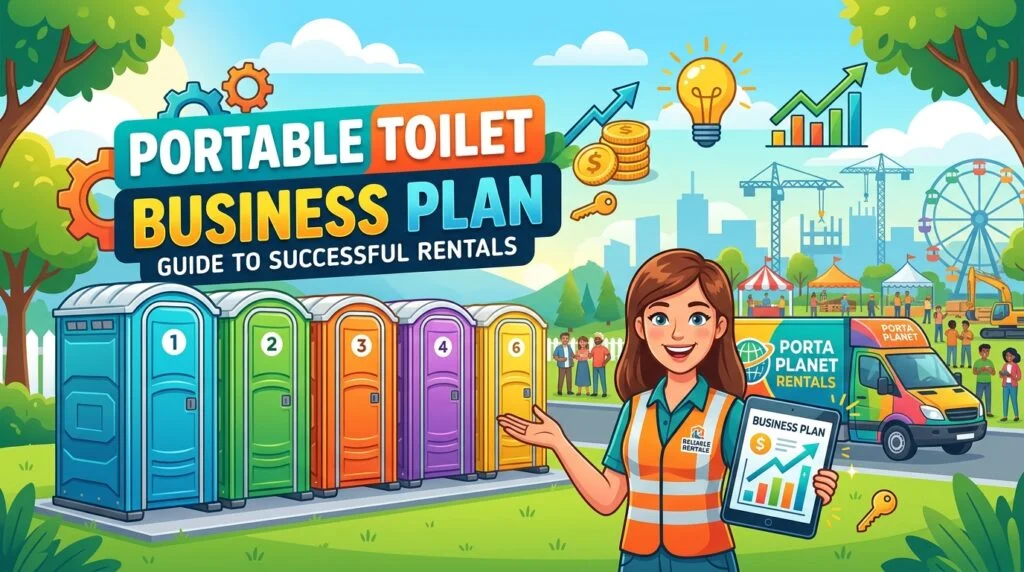
1. Portable Toilet Business Plan Executive Summary
Starting a portable toilet rental business can be a smart and practical opportunity for many startup business owners and small business investors in the United States. Imagine a company called CleanGo Portable Sanitation, located in Dallas, Texas. This business provides portable toilets and sanitation services for places that do not have permanent restrooms. The mission of the company is simple: to provide clean, safe, and reliable sanitation services for communities, workers, and event visitors. Clean sanitation is important for public health, and businesses like this help keep construction sites and outdoor events comfortable for everyone.
CleanGo offers several services. These include portable toilet rentals, hand-washing stations, delivery and pickup services, and regular cleaning and maintenance. The toilets can be rented for construction sites, outdoor festivals, weddings, sports events, parks, and government projects. In the United States, the demand for portable sanitation is growing because construction and outdoor events continue to increase every year. According to industry reports, the portable sanitation industry in the U.S. is worth more than $3 billion, and thousands of construction sites depend on these services every day.
The target customers for this business include construction companies, event organizers, city municipalities, and park departments. The company’s competitive advantage is its focus on cleanliness, fast delivery, and fair pricing. Customers want toilets that are clean and serviced on time, and this business focuses strongly on customer satisfaction. The startup funding required for a small portable toilet company can be around $80,000 to $150,000, which includes buying toilet units, a service truck, cleaning equipment, and marketing costs.
In the beginning, the company may expect steady monthly income from long-term construction contracts and short-term event rentals. As the number of toilets and customers grows, revenue can increase each year. With good service and strong partnerships, the business can grow into a trusted sanitation provider in the local community.
2. Company Description
2.1 Business Overview
A portable toilet rental business provides clean toilets that can be used in places where there are no permanent bathrooms. These toilets are often used at construction sites, outdoor events, parks, and emergencies. The company delivers the toilets to the location, sets them up, cleans them regularly, and removes them when the job or event is finished.
For many businesses and event organizers, portable toilets are not a luxury—they are a basic need. Workers at construction sites may spend 8–10 hours at work, so having safe and clean sanitation is very important. In the United States, safety rules from OSHA (Occupational Safety and Health Administration) require construction companies to provide toilets for workers. Because of this rule, portable toilet services are always in demand.
The portable sanitation industry in the United States is strong and stable. According to industry reports, the U.S. portable sanitation market is worth more than $3 billion and continues to grow each year. There are thousands of construction projects, concerts, festivals, and outdoor sports events every year that require temporary toilets.
The demand for sanitation services is also increasing because cities are growing and outdoor events are becoming more popular. Clean sanitation helps prevent health problems and keeps public spaces safe. This makes the portable toilet rental business an important service in every community.
2.2 Business Structure
The portable toilet business can be started using different legal structures. The most common structure for small businesses in the United States is an LLC (Limited Liability Company). An LLC protects the owner’s personal assets if the business faces legal or financial problems. Some businesses may also choose a corporation if they plan to grow bigger and bring in investors. For very small startups, a sole proprietorship can also be used, but it offers less protection.
In this example, the business is owned by one main founder who manages daily operations. As the company grows, there may also be partners or investors who help with funding and expansion.
The management team may include an owner or CEO, an operations manager, and a sales manager. The operations manager handles delivery, cleaning schedules, and equipment maintenance. The sales manager focuses on finding new customers such as construction companies and event organizers.
2.3 Business Location
The business needs a small office location to handle customer calls, bookings, and administrative work. This office does not need to be large. Many small portable toilet companies start with a rented or home office.
More important than the office is the equipment storage yard. This is a secure open space where the portable toilets, trucks, and cleaning equipment are stored when they are not in use. The yard should be easy for trucks to enter and leave, and it should be located near main roads to make deliveries faster.
The business will serve customers within a service area that may include a single city, several counties, or even an entire state, depending on the company’s size. At the beginning, most companies focus on a local service area so they can deliver and service toilets quickly.
2.4 Mission and Vision
The mission of the portable toilet business is simple: to provide clean, reliable, and affordable sanitation services for workers, event guests, and communities. Clean toilets help protect health and make outdoor spaces more comfortable for everyone.
The vision of the company is to grow into a trusted sanitation provider in the region. Over the next five to ten years, the business plans to expand its fleet of portable toilets, add modern restroom trailers, and serve more cities and large events.
The long-term goal is not just to rent toilets, but to become a reliable partner for construction companies, event planners, and local governments who need dependable sanitation solutions. With good service and strong relationships, the company can grow steadily and build a strong reputation in the industry.
3. Industry and Market Analysis
This section helps readers understand the portable sanitation market in the United States. It explains how the industry works, who the customers are, and where the opportunities are for new businesses. This information is helpful for startup business owners, investors, and entrepreneurs who want to understand the market before starting a portable toilet company.
3.1 Industry Overview
The portable sanitation industry in the United States provides temporary toilets and handwashing stations for places where permanent bathrooms are not available. These services are commonly used at construction sites, outdoor festivals, parks, road projects, and emergency situations.
According to industry reports, the U.S. portable sanitation market is valued at more than $3 billion, and it continues to grow each year. Thousands of construction projects and outdoor events across the country need portable toilets every day. Because sanitation is a basic human need, the demand for these services remains steady even when the economy changes.
Several trends are shaping the industry. One important trend is the focus on cleaner and more eco-friendly sanitation solutions. Many companies now use better cleaning systems, odor control products, and environmentally friendly chemicals. Another trend is the rise of luxury restroom trailers for weddings and large events. These units provide a more comfortable experience compared to standard portable toilets.
There are also strong drivers behind the growth of this industry. One of the biggest drivers is the construction industry. OSHA regulations require construction companies to provide sanitation facilities for workers. As long as buildings, roads, and infrastructure are being built, portable toilet services will be needed.
Outdoor events are another major driver. The United States hosts thousands of concerts, sports events, fairs, and festivals every year, and each event requires sanitation services. Public infrastructure projects, such as road repairs and public park development, also increase the demand for portable sanitation.
3.2 Target Market
A portable toilet business serves many different types of customers.
The largest group of customers is construction companies. Construction workers spend many hours on job sites, so they need clean and accessible toilets. Many construction projects last for months or even years, which means they provide long-term rental income for portable toilet companies.
Another important group of customers is event planners and organizers. Weddings, concerts, fairs, and outdoor festivals require portable toilets for guests. These rentals are usually short-term but can involve many units at once.
Government agencies and municipalities also rent portable toilets for public events, parks, road construction projects, and community activities. Cities sometimes place portable toilets in busy parks or public spaces where permanent restrooms are not available.
Parks and recreation departments often need sanitation services for hiking areas, camping sites, and outdoor sports facilities.
Portable toilets are also used during disaster relief efforts, such as floods, hurricanes, or emergency shelters. In these situations, sanitation services become very important for public health and safety.
3.3 Market Needs
Customers in this industry have simple but very important needs.
First, they need clean sanitation facilities. Nobody wants to use a dirty restroom, so regular cleaning and maintenance are very important for customer satisfaction.
Second, customers want reliable service. Construction companies and event organizers depend on sanitation services being delivered on time. If the toilets are not delivered or cleaned on schedule, it can create serious problems.
Another important need is affordable rental pricing. Businesses and event planners usually work with budgets, so they prefer companies that offer fair and competitive prices.
Customers also value fast delivery and pickup services. Construction schedules and event plans can change quickly, so flexible service is very helpful.
3.4 Competitor Analysis
Like any business, the portable toilet industry has competition. Most cities already have several local portable toilet rental companies serving the market. These companies usually offer similar services, such as standard portable toilets, handwashing stations, and cleaning services.
Pricing can vary depending on the location, the number of units rented, and how often the toilets are serviced. Some companies compete mainly on low prices, while others focus on better service quality and cleanliness.
However, there are still many opportunities in the market. Some competitors may not provide fast service or may have older equipment. This creates a chance for new businesses to stand out by offering cleaner units, better customer service, and modern equipment.
Another opportunity is focusing on specialized services, such as luxury restroom trailers for events or eco-friendly sanitation solutions. By understanding what customers really need and delivering reliable service, a new portable toilet business can successfully compete in this growing industry.
4. Products and Services
In a portable toilet business, the main goal is to provide clean, safe, and easy-to-use sanitation services for places where permanent bathrooms are not available. These services are important for construction workers, event visitors, and people using public spaces. In the United States, safety rules from OSHA require construction sites to provide toilets for workers, which makes portable sanitation services an essential business.
Below are the main products and services offered by a portable toilet company.
4.1 Portable Toilet Rentals
The most common service in this business is portable toilet rental. Companies and event organizers rent these toilets for short or long periods depending on their needs.
The first type is the standard portable toilet. This is the basic unit most people see at construction sites or outdoor festivals. It includes a toilet seat, a holding tank for waste, ventilation, and hand sanitizer. These units are simple, strong, and easy to move. Because they are affordable, they are the most popular choice for construction companies.
Another option is the deluxe flushing portable toilet. These units provide a more comfortable experience. They usually include a flushing system, a small sink, and better odor control. Deluxe toilets are often used at family events, weddings, or VIP areas where guests expect a higher level of comfort.
There are also ADA-compliant accessible toilets. These units are designed for people with disabilities and follow the Americans with Disabilities Act (ADA) guidelines. They are larger in size and allow easy wheelchair access. Many public events and government projects are required to include these accessible toilets.
4.2 Event Sanitation Services
Portable toilet businesses also offer sanitation solutions for large events. Events such as concerts, sports games, fairs, weddings, and festivals often need many restroom units for guests.
One premium option is luxury restroom trailers. These trailers are much more comfortable than standard portable toilets. They often include flushing toilets, running water, mirrors, lighting, and air conditioning. Luxury restroom trailers are popular for high-end weddings, corporate events, and VIP gatherings where guests expect a better restroom experience.
Another important service is providing portable sinks and handwashing stations. These units allow people to wash their hands with soap and water. Handwashing is important for hygiene and public health, especially at events where food is served. After the COVID-19 pandemic, many organizers now require handwashing stations at large gatherings.
4.3 Maintenance and Cleaning
Providing portable toilets is not enough. They must also be cleaned and maintained regularly. Clean toilets keep customers happy and prevent health problems.
Most portable toilet companies provide weekly cleaning services for long-term rentals such as construction sites. During each service visit, workers clean the inside of the unit, refill toilet paper and sanitizer, and check for any damage.
Another important service is waste pumping and disposal. Special vacuum trucks are used to remove waste from the holding tanks. The waste is then transported to an approved treatment facility, following local environmental regulations. This process keeps the toilets clean and safe to use.
4.4 Delivery and Pickup
A portable toilet business also provides transportation, setup, and removal services. The company uses trucks and trailers to deliver the toilets to the customer’s location.
The team places the units in safe and convenient spots where workers or guests can easily use them. Proper setup is important for stability and cleanliness.
When the rental period is finished, the company returns to pick up the units and transport them back to the storage yard. Quick delivery and pickup services are very important because construction schedules and event plans can change quickly.
5. Marketing and Sales Strategy
This section explains how the portable toilet business will find customers, promote its services, and build a strong brand. A good marketing and sales plan helps the company grow faster and reach more clients such as construction companies, event organizers, and government departments. This section is written for startup business owners, entrepreneurs, and investors who want to understand how sanitation businesses attract customers.
5.1 Marketing Plan
Marketing is how a business tells people about its services. Today, most businesses grow by using digital marketing and local partnerships.
One of the most important tools is a business website with SEO (Search Engine Optimization). A website works like an online office where customers can learn about services, prices, and contact information. SEO helps the website appear on Google search results when people search for “portable toilet rental near me.” According to marketing studies, more than 70% of customers search online before choosing a service. A strong website helps build trust and bring new customers.
For businesses that want professional help, Website and SEO services from Malik Faizan can help improve online visibility, increase website traffic, and attract more local customers. A well-optimized website can bring steady leads every month without spending too much on advertising.
Another powerful tool is a Google Business Profile. This free tool helps businesses appear on Google Maps and local search results. When someone searches for portable toilet rentals in their city, businesses with a strong Google profile and good customer reviews are more likely to get calls.
Online advertising is also important. Platforms like Google Ads allow businesses to show ads to people who are actively searching for sanitation services. This helps the company reach customers who already need the service.
Social media marketing is another useful strategy. Platforms like Facebook and Instagram can help businesses share pictures of their equipment, successful event setups, and customer testimonials. Social media also helps build trust and brand awareness.
The business will also focus on local contractor partnerships. Many construction companies work on projects for months or years. By building strong relationships with contractors, the portable toilet business can secure long-term rental contracts.
5.2 Sales Strategy
A good marketing plan brings attention to the business, but the sales strategy converts interest into paying customers.
One effective approach is direct sales to construction companies. The company can contact local construction firms, visit job sites, and introduce its services. Construction projects often need multiple toilets for long periods, which creates stable monthly income.
Another strategy is building partnerships with event planners and event management companies. Weddings, festivals, concerts, and sports events all require sanitation services. By working closely with event planners, the company can become their trusted sanitation provider.
The business will also look for opportunities through government bidding contracts. Local governments and municipalities often post public tenders for sanitation services at parks, road projects, and community events. Winning these contracts can provide steady revenue and long-term growth.
5.3 Branding
Branding helps a company look professional and trustworthy. When customers see a strong brand, they feel more confident about the service.
The first step is creating a professional company logo. A simple and clean logo helps customers remember the business. It should appear on all marketing materials, including the website, trucks, and uniforms.
Another important branding tool is branded service trucks. When trucks drive around the city with the company logo and contact number, they act like moving advertisements. People see the brand many times, which helps them remember the company when they need sanitation services.
Finally, employees will wear professional uniforms with the company logo. Uniforms create a clean and organized appearance. They also show customers that the company takes its service seriously.
6. Operations Plan
Running a portable toilet business is not only about renting toilets. It also requires good daily operations, proper equipment, and a safe storage yard. These systems help the company provide clean sanitation services and keep customers satisfied. This section is helpful for startup business owners and investors who want to understand how the business works every day.
6.1 Daily Operations
The daily operations of a portable toilet business focus on delivery, cleaning, and proper waste management. These activities ensure that customers always receive clean and reliable service.
One important task is delivery and pickup scheduling. The company receives rental orders from construction companies, event planners, and government agencies. Based on these orders, a schedule is created for drivers to deliver toilets to different locations. Good scheduling helps reduce fuel costs and saves time. For example, multiple deliveries in the same area can be planned on the same day.
Another daily responsibility is cleaning and servicing the toilets. Portable toilets must be cleaned regularly to maintain hygiene and remove bad odors. For long-term rentals, such as construction sites, units are usually serviced once or twice a week. During each visit, workers clean the interior, refill toilet paper, add deodorizing chemicals, and check if any repairs are needed.
The waste disposal process is also a very important part of daily operations. Portable toilets store waste in holding tanks. Special vacuum trucks are used to pump the waste from the tanks. After collection, the waste is transported to an approved wastewater treatment facility, where it is processed safely according to environmental regulations.
Proper waste handling is important for protecting the environment and public health. In the United States, sanitation businesses must follow rules from local environmental agencies and the Environmental Protection Agency (EPA) to ensure waste is disposed of safely.
6.2 Equipment
The portable toilet business relies on several types of equipment to provide its services efficiently.
The most important equipment is the portable toilet units themselves. These units are made from durable plastic materials that are easy to clean and move. A small company may start with 20 to 50 units, while larger companies may operate hundreds or even thousands of units.
Another essential piece of equipment is the vacuum pump truck. This truck is used to remove waste from portable toilets during servicing. The truck has a powerful vacuum system and a storage tank that holds the waste until it can be taken to a treatment facility.
The business also uses cleaning equipment and chemicals. These include disinfectants, deodorizing solutions, water tanks, pressure washers, and cleaning tools. Modern sanitation companies often use eco-friendly cleaning products that help reduce environmental impact while keeping the units fresh and hygienic.
Reliable equipment is important because it helps the company maintain service quality and operate efficiently.
6.3 Storage and Yard
A portable toilet business also needs a secure storage yard where all equipment and units can be kept when they are not being used.
The storage yard should be large enough to store the portable toilet units, trucks, and cleaning equipment. It should also be secure and fenced to prevent theft or damage. Easy access to main roads is helpful because it allows trucks to leave quickly for deliveries and service visits.
The yard should also include a maintenance area. This is a space where damaged units can be repaired and cleaned before being sent out again. Regular maintenance helps extend the life of the equipment and keeps the units looking professional.
Many successful sanitation companies keep their yards organized and clean, which helps workers operate more efficiently. A well-managed storage yard also improves safety for employees and protects valuable equipment.
7. Legal and Regulatory Requirements (USA)
7.1 Business Registration
The first step is registering the business legally. Every company in the United States must have a legal business structure. Many small sanitation businesses choose an LLC (Limited Liability Company) because it protects the owner’s personal money and property if the business faces financial problems.
To register the company, the owner files documents with the state government. After registration, the business receives an Employer Identification Number (EIN) from the Internal Revenue Service (IRS). The EIN works like a tax ID number for the business. It is required for paying taxes, opening a business bank account, and hiring employees.
Registering the business properly builds trust and helps the company operate legally.
7.2 State and Local Licenses
In addition to business registration, the company must also obtain state and local licenses. These licenses allow the business to operate legally in a specific city or county.
The exact requirements may vary depending on the location. Some cities require a general business license, while others may require a sanitation service permit. Local governments want to ensure that sanitation companies follow health and safety rules when providing services.
Before starting operations, it is always a good idea to contact the local city office or county administration to confirm the required permits.
7.3 Environmental Regulations
Portable sanitation businesses must follow environmental protection laws. These laws are designed to protect water sources, soil, and public health.
In the United States, the Environmental Protection Agency (EPA) sets national guidelines for waste management. Many states also have their own environmental departments that regulate sanitation services.
The company must make sure that waste from portable toilets is handled safely and does not contaminate the environment.
7.4 Waste Disposal Permits
Another important requirement is obtaining waste disposal permits. Portable toilets store human waste in holding tanks. When the tanks are full, the waste must be pumped out using special vacuum trucks.
The collected waste cannot be dumped anywhere. It must be transported to an approved wastewater treatment facility where it can be processed safely.
Some states require sanitation companies to obtain a waste transport permit to move and dispose of this waste legally. These permits ensure that waste is handled responsibly.
7.5 OSHA Safety Requirements
Worker safety is also very important. The Occupational Safety and Health Administration (OSHA) sets safety rules for workplaces in the United States.
Construction sites are required to provide sanitation facilities for workers. OSHA rules state that employers must provide at least one toilet for every 20 workers on a job site.
Portable toilet service companies must also follow OSHA guidelines to protect their own employees. This includes proper training for handling equipment, safe waste pumping procedures, and using protective gear such as gloves and safety clothing.
7.6 Insurance Coverage
A portable toilet business also needs insurance coverage to protect the company from unexpected problems.
The most common type of insurance is general liability insurance. This helps cover costs if someone is injured or if property is damaged during business operations.
Another important coverage is commercial vehicle insurance, which protects the trucks used for deliveries and waste pumping.
If the business hires employees, it may also need workers’ compensation insurance, which helps cover medical costs if a worker is injured on the job.
8. Startup Costs
Starting a portable toilet business requires some initial investment. These startup costs help the business buy equipment, prepare operations, and start serving customers. For startup business owners and small investors, understanding these costs is important before launching the company.
The good news is that this type of business can start small and grow over time. Many successful sanitation companies started with 20 to 30 portable toilets and one service truck, then expanded as they gained more customers.In total, starting a small portable toilet business in the United States may require an investment of about $80,000 to $150,000, depending on equipment choices and the size of the operation.
Although this may seem like a large investment, the portable sanitation industry offers stable demand and long-term rental income. With good planning, reliable service, and strong customer relationships, the business can grow steadily and become a profitable operation over time.
12. Risk Analysis
Every business faces risks, and the portable toilet rental business is no different. Understanding these risks helps startup business owners and investors prepare better and avoid big problems later. When a company plans carefully, it can reduce losses and keep the business running smoothly.
One common risk is strong local competition. In many cities in the United States, several portable sanitation companies already serve construction sites and events. Industry reports show that the U.S. portable sanitation industry includes thousands of service providers, which means new businesses must work harder to attract customers. To reduce this risk, a company should focus on better service quality, clean units, fast delivery, and fair prices. Customers usually stay loyal to companies that provide reliable service.
Another possible risk is equipment breakdown. Portable toilets, vacuum trucks, and cleaning machines are often used and may stop working if they are not maintained properly. For example, if a vacuum pump truck breaks down, the company may not be able to clean units on time. This can affect customer trust. To prevent this problem, businesses should perform regular equipment maintenance and inspections. Keeping spare parts and a repair budget can also help reduce downtime.
The business may also face seasonal demand changes. During warm months, there are many outdoor festivals, concerts, and construction projects, which increase demand for portable toilets. However, in colder months, some construction work may slow down. To handle this, companies can focus on long-term construction contracts and government projects that provide steady work throughout the year.
Another important risk is environmental compliance. Portable toilet companies must follow strict rules for waste handling. Waste must be transported to approved wastewater treatment facilities according to regulations from the Environmental Protection Agency (EPA) and local authorities. Proper training and responsible waste management help prevent fines and legal issues.
By planning, maintaining equipment, and following safety and environmental rules, a portable toilet business can reduce risks and build a strong, reliable company.
Portable Toilet Business Plan Summary
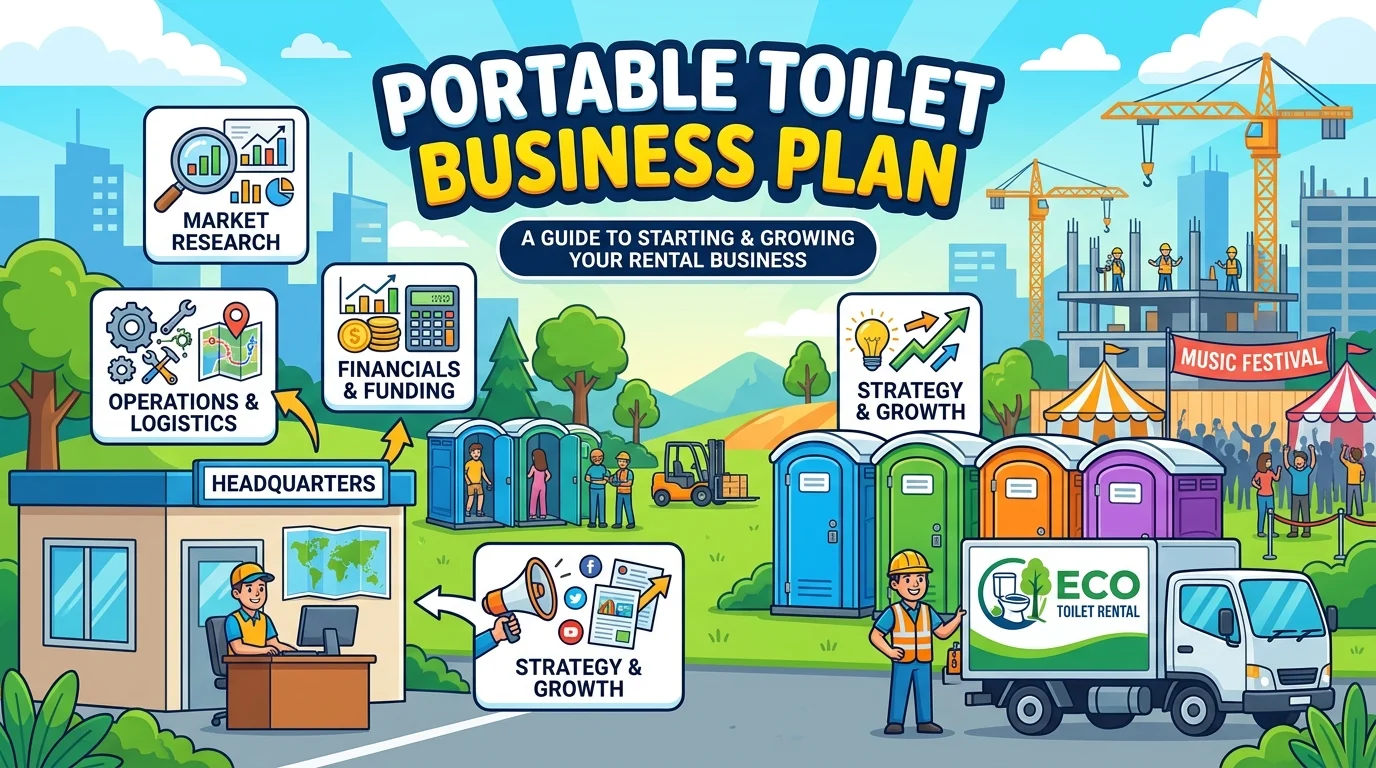
The portable toilet rental business provides clean sanitation services for construction sites, outdoor events, parks, and public projects. A company like CleanGo Portable Sanitation in Dallas offers portable toilets, handwashing stations, cleaning services, and delivery. The U.S. portable sanitation industry is worth over $3 billion, showing strong and steady demand. Customers include construction companies, event planners, and government agencies. Success depends on reliable service, proper equipment, and strong marketing strategies such as websites, SEO, and partnerships. Starting the business may require $80,000–$150,000 in investment. With good planning, safe waste management, and quality service, the company can grow into a trusted sanitation provider.
FAQ – Portable Toilet Business Plan
1. What is a portable toilet business?
A portable toilet business provides temporary toilets for places where permanent bathrooms are not available. These toilets are commonly used at construction sites, outdoor events, parks, and festivals. The company delivers the toilets, cleans them regularly, and removes them when they are no longer needed.
2. Is a portable toilet business profitable?
Yes, a portable toilet business can be profitable because sanitation services are always needed. Construction sites and outdoor events require portable toilets regularly. Many companies earn steady monthly income from long-term rentals.
3. How much does it cost to start a portable toilet business?
Starting a portable toilet business in the United States usually costs between $80,000 and $150,000. This cost includes buying portable toilet units, a vacuum pump truck, cleaning equipment, marketing, licenses, and insurance.
4. Who are the main customers for portable toilet services?
The main customers include:
- Construction companies
- Event planners and festival organizers
- Government agencies and municipalities
- Parks and recreation departments
- Disaster relief organizations
5. How do portable toilet companies make money?
Portable toilet companies make money by renting toilets for daily, weekly, or monthly periods. Construction companies often rent units for long projects, while events like concerts and weddings rent many units for short periods.
6. How often are portable toilets cleaned?
Most portable toilets are cleaned once or twice a week, especially on construction sites. During cleaning, workers remove waste, refill supplies, and disinfect the units.
7. What equipment is needed to start this business?
Some important equipment includes:
- Portable toilet units
- Vacuum pump trucks
- Cleaning equipment and chemicals
- Delivery trucks or trailers
- Storage yard for equipment
8. Do portable toilet businesses need licenses?
Yes. In the United States, businesses must register legally and obtain local licenses, waste disposal permits, and insurance. Companies must also follow rules from the Environmental Protection Agency (EPA) and OSHA safety regulations.
9. How can a portable toilet business find customers?
Businesses can attract customers through websites, SEO, Google Business Profile, social media marketing, and partnerships with construction companies and event planners.
10. What are the biggest risks in this business?
Some common risks include strong competition, equipment breakdown, seasonal demand changes, and environmental regulations. These risks can be reduced with good planning, equipment maintenance, and quality customer service.
