

Introduction
Are you thinking about starting a vending machine business but have no idea where to begin? You’re not alone. The vending machine industry might seem simple on the surface—find a machine, stock it, and watch the money roll in. But the truth is, without a solid business plan, you could end up losing money instead of making it. A well-crafted business plan is your secret weapon. It helps you stay organized, make smart decisions, and avoid costly mistakes before they happen.
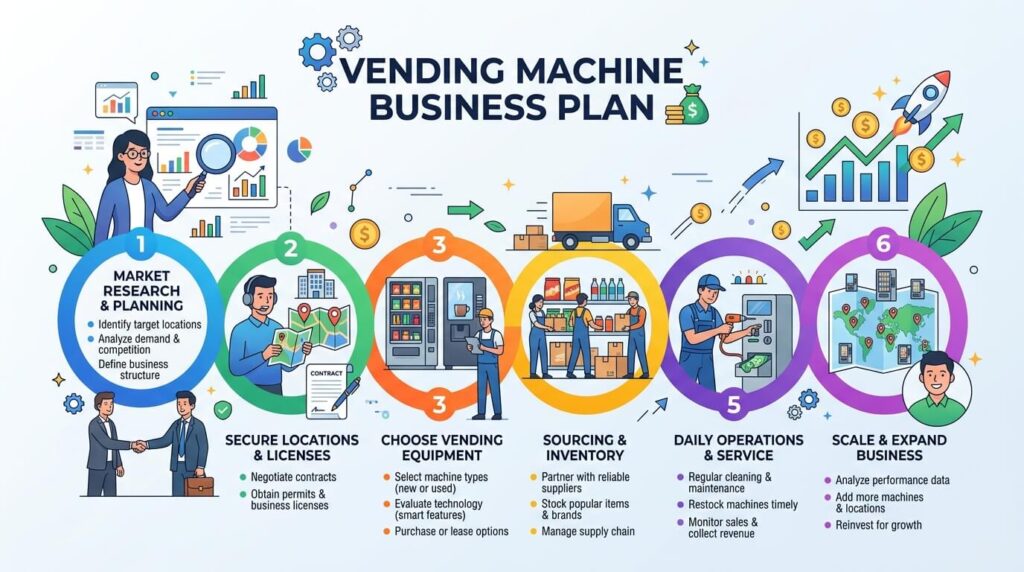
In this guide, we’ll walk you through every step of creating a vending machine business plan that actually works. We’ll cover everything from market research and choosing the right products to financial planning, finding the best locations, and growing your business over time.
Whether you’re starting with one machine or planning to build an entire vending machine empire, this guide will give you the blueprint you need. Let’s dive in!
Why is a Vending Machine Business Plan Essential?
Starting a vending machine business sounds straightforward, right? Buy a machine, find a spot, fill it with snacks, and collect cash. But without a clear plan, things can go sideways fast. A vending machine business plan keeps you focused and gives you a clear path to follow from day one.
The Importance of a Business Plan for Your Vending Machine Business
A good business plan forces you to think through every part of your business before you spend a single dollar. It helps you figure out what products to sell, where to place your machines, how much money you’ll need to get started, and how long it will take to turn a profit.
Without a plan, you risk placing machines in low-traffic locations, stocking products nobody wants, or running out of cash before your business gets off the ground. A business plan keeps your vision clear and your strategy sharp. It’s not just paperwork—it’s the foundation of your entire operation.
Securing Funding and Managing Finances
Even though vending machines have lower startup costs compared to many other businesses, you still need money to get going. Whether you’re using your own savings, applying for a small business loan, or looking for investors, a solid business plan shows that you’ve done your homework.
Your financial section should clearly outline your startup costs, expected monthly income, operating expenses, and projected profits. This gives lenders or investors the confidence that your business is worth backing. And even if you’re self-funding, having these numbers laid out helps you manage your money wisely and avoid overspending.
Setting Long-Term Goals
A business plan isn’t just about getting started—it’s about where you want to be in the future. Do you want to own 10 machines in the next year? 50 machines in five years? Maybe you want to branch out into specialty vending machines that sell electronics or healthy snacks.
Your business plan helps you set realistic short-term and long-term goals. It gives you milestones to aim for and a way to measure your progress along the way. Without these goals, it’s easy to lose motivation or get stuck in a rut.
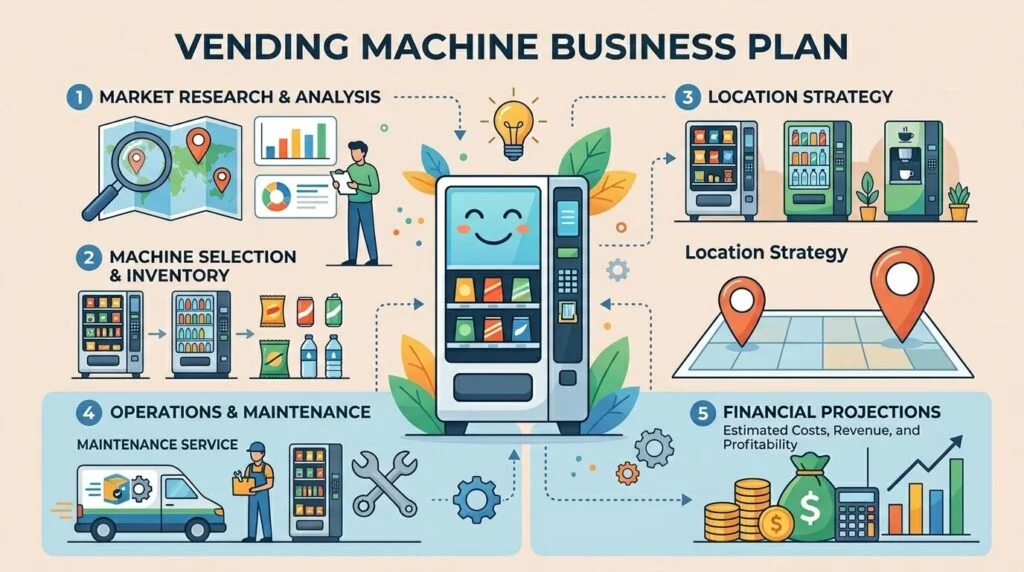
Key Components of a Vending Machine Business Plan
A strong vending machine business plan should cover all the bases. Here are the main sections you’ll need:
- Executive Summary – A quick overview of your business, your mission, and your goals.
- Market Research – Information about your target market, competitors, and ideal locations.
- Product Selection – What you’ll stock in your machines and why.
- Financial Plan – Startup costs, pricing, revenue projections, and profit margins.
- Operations Plan – How you’ll manage restocking, maintenance, and day-to-day tasks.
- Marketing Strategy – How you’ll attract location partners and customers.
Each of these sections plays a vital role in building a business that lasts. Let’s break them down one by one.
Market Research and Analysis
Before you buy your first vending machine, you need to understand the market you’re stepping into. Market research gives you the information you need to make smart decisions about where to place your machines, what products to sell, and how to stay ahead of the competition.
Target Audience: Identifying Your Ideal Customers
Who’s going to be buying from your vending machines? The answer depends entirely on where you place them. Different locations attract different types of customers, and understanding this is key to choosing the right products.
For example:
- Office workers might want coffee, energy drinks, healthy snacks, and quick lunch options.
- Students in schools or universities often go for affordable snacks, sodas, and candy.
- Gym-goers are more likely to buy protein bars, water, and sports drinks.
- Hospital visitors and staff might appreciate fresh sandwiches, bottled water, and comfort snacks.
- Travelers at airports or bus stations often look for drinks, snacks, and small convenience items.
By understanding your target audience, you can stock your machines with products that actually sell. This means less waste, more sales, and happier customers.
Competitor Analysis: Understanding Your Local Market
Take time to study the vending machines already operating in your area. Where are they located? What products do they sell? Are they well-maintained, or do they look old and neglected?
This kind of research can reveal gaps in the market that you can fill. Maybe there are office buildings with no vending machines nearby. Or perhaps existing machines only sell junk food, and there’s a demand for healthier options. Maybe the machines in your area are outdated and don’t accept card payments—this is your chance to offer a better experience.
Look at your competitors’ strengths and weaknesses. Learn from what they’re doing right, and find ways to do it even better.
Location: How Choosing the Right Spot Impacts Your Success
In the vending machine business, location is everything. A great machine in a bad location will barely make any money. But even an average machine in a high-traffic spot can be very profitable.
Here are some prime locations to consider:
- Office buildings with 50+ employees
- Schools and universities
- Hospitals and medical centers
- Gyms and fitness centers
- Apartment complexes and laundromats
- Hotels and motels
- Manufacturing plants and warehouses
- Transportation hubs like bus stations and airports
When scouting locations, pay attention to foot traffic, the number of people who spend time there daily, and whether there are already vending machines on-site. A location with high foot traffic and limited food options is your sweet spot.
Industry Trends: Keeping Up with Vending Machine Trends
The vending machine industry is changing fast. Staying on top of trends will help you stay competitive and attract more customers. Here are some trends worth paying attention to:
- Cashless Payments: More and more people prefer to pay with cards or mobile wallets. Machines that accept cashless payments tend to generate higher sales.
- Healthy Vending: The demand for healthier snack and drink options is growing. Offering organic, low-sugar, or gluten-free products can help you tap into this market.
- Smart Vending Machines: Modern machines come with remote monitoring, inventory tracking, and real-time sales data. These features make it easier to manage your business efficiently.
- Specialty Vending: Some entrepreneurs are finding success with niche machines that sell items like electronics, beauty products, or fresh food.
By staying ahead of these trends, you can position your vending machine business as modern, convenient, and customer-friendly.
Defining Your Vending Machine Business Concept
Your business concept is what makes your vending machine operation unique. It shapes the type of machines you buy, the products you sell, and the way you position yourself in the market. A clear concept helps you stand out from the crowd and build a recognizable brand.
Deciding on Your Vending Machine Niche
Not all vending machine businesses are the same. Choosing a niche helps you focus your efforts and attract the right customers. Here are some popular niches to consider:
- Traditional Snack and Drink Machines: These are the classics—chips, candy bars, sodas, and bottled water. They work well in almost any high-traffic location.
- Healthy Vending Machines: Stock your machines with nutritious options like granola bars, dried fruit, nuts, protein shakes, and sparkling water. These are popular in gyms, offices, and health-conscious communities.
- Coffee Vending Machines: Automated coffee machines can serve espresso, lattes, cappuccinos, and hot chocolate. These are great for offices, hotels, and waiting areas.
- Specialty Vending Machines: Think outside the box. Some vending machines sell electronics, phone chargers, beauty products, or even fresh meals. These can be very profitable in the right locations.
- Combo Machines: These machines offer both snacks and drinks in one unit. They’re versatile and work well in smaller locations where space is limited.
Defining Your Brand Identity
Even in the vending machine business, branding matters. Your brand is how people perceive your business, and it influences whether location owners want to work with you and whether customers trust your machines.
Consider the following:
- Business Name and Logo: Choose a name that’s memorable and reflects what your business is about. A clean, professional logo adds credibility.
- Machine Appearance: Keep your machines clean, well-lit, and visually appealing. A dirty or broken machine drives customers away. First impressions count.
- Customer Experience: Make sure your machines are easy to use, accept multiple payment methods, and always have popular products in stock. A positive experience keeps customers coming back.
How Your Concept Ties Into Product Selection and Customer Experience
Your business concept should guide every decision you make—from the products you stock to the technology you use. If you’re positioning yourself as a healthy vending option, then every product in your machine should reflect that. If you’re targeting busy professionals, speed and convenience should be your top priorities.
Ask yourself these questions:
- What type of products best fit my target locations?
- How can I make my machines more convenient and appealing than the competition?
- What experience do I want customers to have when they use my machines?
When your concept, products, and customer experience are all aligned, your business feels cohesive and professional. And that’s what sets successful vending machine operators apart from the rest.
Choosing the Right Products for Your Vending Machines
The products you stock in your vending machines can make or break your business. Choose the right ones, and you’ll see steady sales and happy customers. Choose the wrong ones, and you’ll be throwing away expired inventory and losing money. Here’s how to get it right:
Building a Profitable Product Mix
A smart product mix balances popular items with higher-margin products. You want a variety of options that appeal to different tastes and preferences while keeping your profit margins healthy.
- Snacks: Chips, cookies, candy bars, nuts, trail mix, granola bars, and protein bars are all popular choices. Include a mix of indulgent and healthy options.
- Beverages: Water, sodas, energy drinks, juices, iced teas, and sports drinks are vending machine staples. Consider adding specialty drinks or flavored water for variety.
- Fresh and Healthy Options: If your target market values health, include items like fresh fruit, salads, yogurt cups, hummus and crackers, or veggie wraps.
- Seasonal Items: Rotate some products based on the season. Hot drinks and soups in winter, cold drinks and ice cream in summer.
Importance of Product Quality and Sourcing
The quality of your products matters more than you might think. Customers notice when a vending machine is stocked with stale chips or off-brand sodas. Here’s how to keep your product quality high:
- Buy from Wholesale Suppliers: Purchasing in bulk from wholesale suppliers like Costco, Sam’s Club, or specialty vending distributors helps you keep costs low while maintaining quality.
- Check Expiration Dates: Always rotate your stock and remove items before they expire. Selling expired products damages your reputation and could lead to legal issues.
- Offer Recognizable Brands: While generic products have higher margins, customers tend to trust and prefer well-known brands. Find a balance between name-brand items and lesser-known but high-quality alternatives.
Tailoring Your Product Selection to Your Location
Different locations call for different products. Here’s how to match your inventory to your audience:
- Office Buildings: Coffee, energy drinks, granola bars, sandwiches, and bottled water.
- Schools and Universities: Affordable snacks, sodas, chips, candy, and sports drinks.
- Gyms and Fitness Centers: Protein bars, protein shakes, water, electrolyte drinks, and healthy snacks.
- Hospitals: Comfort snacks, fresh sandwiches, soup, water, and juice.
- Hotels and Travel Hubs: A wide variety of snacks, beverages, toiletries, and convenience items.
By customizing your product selection based on where your machine is located, you’ll see higher sales and less wasted inventory.
Financial Planning and Strategy
Getting your finances right is one of the most important parts of your vending machine business plan. You need to know how much it costs to get started, how much money you can expect to make, and how to keep your business profitable over time.
Startup Costs: Breaking Down Initial Investments
The good news is that vending machine businesses have relatively low startup costs compared to other businesses. But you still need to plan carefully. Here’s what you should budget for:
- Vending Machines: A new vending machine can cost anywhere from $3,000 to $10,000, depending on the type and features. Used machines can be found for $1,000 to $3,000. Smart machines with cashless payment options and remote monitoring will cost more but can pay for themselves through higher sales.
- Initial Inventory: You’ll need to stock your machines with products before you start earning. Budget around $200 to $500 per machine for the initial fill, depending on the size and product type.
- Transportation: You’ll need a way to transport your machines and restock them regularly. A used van or truck can cost $5,000 to $15,000, or you might be able to use your existing vehicle if you’re starting small.
- Location Fees: Some locations charge a commission or monthly fee for placing your machine on their property. This typically ranges from 10% to 25% of your machine’s sales.
- Business Registration and Insurance: Don’t forget about the costs of registering your business, getting the necessary permits, and purchasing liability insurance.
- Maintenance and Repairs: Set aside a small budget for unexpected repairs and routine maintenance. Keeping your machines in good working condition is essential for customer satisfaction and revenue.
Revenue Streams: Planning for Different Sources of Income
Your primary income will come from product sales, but there are other ways to boost your revenue:
- Product Sales: This is the bread and butter of your business. Each item sold generates a profit based on the difference between your wholesale cost and the retail price.
- Advertising: Some vending machine owners sell advertising space on their machines. Digital screens on modern machines can display ads, creating an additional revenue stream.
- Commission from Locations: In some cases, you might negotiate a deal where the location owner pays you to provide vending services, especially if your machines add value to their space.
- Bulk Vending: Consider adding small gumball or toy vending machines in family-friendly locations. These have very high profit margins and require minimal maintenance.
Profit Margins: Understanding Your Pricing Strategy
Pricing your products correctly is essential for maintaining healthy profit margins. Here’s what you need to know:
- Cost of Goods Sold (COGS): Calculate how much each product costs you at wholesale. For example, if you buy a bag of chips for $0.50 and sell it for $1.50, your gross profit on that item is $1.00.
- Average Markup: Vending machine products typically have a markup of 100% to 300%. This means if an item costs you $0.50, you might sell it for $1.00 to $2.00.
- Location-Based Pricing: Prices can vary based on location. A bottle of water at an airport vending machine can sell for more than the same bottle at an office building. Adjust your prices based on what the local market will bear.
- Cashless Payment Premium: Machines that accept card and mobile payments tend to see higher average transaction amounts. Customers spend more when they don’t have to worry about carrying exact change.
Financial Projections: Creating Realistic Forecasts
Creating realistic financial projections helps you plan for the future and track your progress. Here’s what to include:
- Sales Forecasts: Estimate how many items each machine will sell per day and month. A well-placed machine can generate $200 to $800 or more per month in sales, depending on the location and products.
- Cash Flow: Track your monthly income and expenses to ensure you always have enough cash on hand. This includes product costs, location fees, transportation, maintenance, and any loan payments.
- Break-Even Analysis: Calculate how long it will take for each machine to pay for itself. For example, if a machine costs $3,000 and generates $300 per month in profit, it will take about 10 months to break even.
- Profit Margins: Aim for a net profit margin of 20% to 50% per machine after all expenses. Regularly review your numbers and adjust your product mix or pricing as needed.
Funding Options: How to Finance Your Vending Machine Business
There are several ways to fund your vending machine business:
- Personal Savings: This is the simplest option. Using your own money means no debt and no investors to answer to. If you’re starting with just one or two machines, this might be all you need.
- Small Business Loans: Banks and online lenders offer small business loans that can help you purchase machines and inventory. A strong business plan will increase your chances of getting approved.
- Equipment Financing: Some vendors and lenders offer financing specifically for vending machine purchases. This lets you spread the cost over time while your machines start generating income.
- Investors or Partners: If you’re planning a larger operation, you might consider bringing in a business partner or investor. Just make sure the terms are clear and fair for everyone involved.
Operations and Management Plan
Smooth operations are the backbone of any successful vending machine business. Unlike a traditional business, you won’t have a storefront to manage. But you’ll still need systems in place to keep things running efficiently.
Day-to-Day Operations
Running a vending machine business involves several routine tasks that you’ll need to stay on top of:
- Restocking: Regularly visit your machines to refill products. The frequency depends on how fast items sell—some machines might need restocking twice a week, while others might only need it once every two weeks.
- Cash Collection: If your machines accept cash, you’ll need to collect it regularly. Cashless machines reduce the need for frequent visits but still require monitoring.
- Cleaning and Maintenance: Keep your machines clean and in good working order. A dirty or broken machine loses customers fast. Schedule regular cleaning and inspect machines for any mechanical issues.
- Inventory Tracking: Use a system—whether it’s a simple spreadsheet or vending management software—to track what products sell best, what needs restocking, and what isn’t moving. This data helps you make smarter purchasing decisions.
Route Planning: Managing Multiple Machines Efficiently
As your business grows and you add more machines, efficient route planning becomes critical. You’ll want to group nearby machines together so you can restock and service them in a single trip.
- Plan Your Routes: Organize your machines by geographic area and create a restocking schedule that minimizes drive time.
- Use Technology: Vending management software and smart machines with remote monitoring can alert you when stock is low or when a machine needs attention. This saves you from making unnecessary trips.
- Track Mileage and Fuel Costs: Transportation costs can eat into your profits if you’re not careful. Keep track of your mileage and fuel expenses so you can factor them into your financial planning.
Staffing: When to Hire Help
When you’re starting out, you’ll likely handle everything yourself—restocking, maintenance, bookkeeping, and more. But as your business grows, you might need to bring on help.
- Part-Time Helpers: If you have a large number of machines, consider hiring a part-time employee to help with restocking and maintenance.
- Route Drivers: As your operation expands to cover a wider area, hiring dedicated route drivers can help you manage your machines more efficiently.
- Bookkeeper or Accountant: As your finances get more complex, having a bookkeeper or accountant can help you stay organized and ensure you’re managing your money properly.
Maintenance: Keeping Your Machines Running Smoothly
Preventive maintenance is far cheaper than emergency repairs. Here are some tips:
- Regular Inspections: Check your machines regularly for jammed mechanisms, broken coin slots, and display issues.
- Keep Spare Parts: Have common replacement parts on hand, such as motors, coils, and bill validators, so you can fix issues quickly.
- Professional Repairs: For more complex problems, have a reliable technician you can call. Building a relationship with a vending machine repair service can save you time and money in the long run.
Marketing and Promotion Strategy
You might think vending machines don’t need marketing, but you’d be wrong. Marketing helps you secure better locations, build relationships with property owners, and attract more customers to your machines.
Branding: Building Your Vending Machine Business Image
Even in the vending machine world, a strong brand makes a difference. It helps you stand out when approaching location owners and builds trust with customers.
- Professional Appearance: Keep your machines clean, well-lit, and fully stocked at all times. A professional-looking machine signals reliability and quality.
- Business Cards and Brochures: Have marketing materials ready when you approach potential location partners. A professional pitch with clear information about your services makes a great first impression.
- Website and Social Media: Create a simple website that explains your services, lists the types of machines you offer, and provides contact information. Social media can be useful for sharing updates, promotions, and connecting with potential location partners.
Building Relationships with Location Owners
Your relationship with location owners is crucial to your success. Here’s how to build and maintain strong partnerships:
- Offer Value: When pitching to a location owner, focus on the value your machine brings—convenience for their employees or customers, a share of the revenue, and zero effort on their part.
- Be Reliable: Always restock on time, keep your machines clean, and address any issues quickly. A reliable vending partner is one that location owners want to keep around.
- Negotiate Fair Deals: Offer a reasonable commission to location owners. A typical arrangement is 10% to 25% of sales, depending on the location’s traffic and desirability.
Customer Engagement: Encouraging Repeat Purchases
Even though vending machines are self-service, there are still ways to engage your customers and encourage them to buy more:
- Product Variety: Regularly rotate your product selection to keep things fresh and exciting. If customers see the same items every day, they might get bored and stop buying.
- Promotions: Consider running promotions, such as “Buy 2, Get 1 Free” deals displayed on the machine screen, to encourage larger purchases.
- Feedback Mechanism: Put a simple sticker or QR code on your machines that lets customers suggest products or report issues. This shows you care about their experience and helps you improve.
Online Presence: Why It Matters for Vending Machine Businesses
Having an online presence might not seem important for a vending machine business, but it can help you grow faster:
- Website and Social Media: Creating a professional online presence can help your vending machine business grow faster. A simple website should clearly explain your services, show the types of vending machines you offer, and provide easy contact options for potential location partners. Social media platforms can also help you share updates, promotions, and connect with businesses that may want vending machines installed at their locations. If you need help building a website or promoting your business online, you can use Malik Faizan Digital Marketing Services to handle website development, SEO, and digital marketing so your business can reach more customers and potential partners.
Setting Goals and Metrics for Success
Without clear goals, it’s hard to know whether your vending machine business is on the right track. Setting specific, measurable goals gives you something to aim for and helps you make smarter decisions along the way.
Defining Short-Term and Long-Term Goals
- Short-Term Goals (First 6-12 Months): Place your first 3-5 machines in profitable locations. Reach a monthly revenue target. Establish relationships with reliable suppliers. Build a system for restocking and maintenance.
- Long-Term Goals (1-5 Years): Expand to 20, 50, or 100+ machines. Hire employees to help manage operations. Diversify your product offerings or machine types. Generate a consistent passive income stream.
Key Performance Indicators (KPIs)
Track these metrics to gauge the health of your business:
- Revenue Per Machine: How much income does each machine generate per month? This helps you identify your best and worst locations.
- Product Sell-Through Rate: Which products sell fastest? Which ones sit in the machine too long? Use this data to optimize your product mix.
- Machine Downtime: How often are your machines out of service? Frequent downtime means lost revenue and unhappy customers.
- Profit Margins: Are your margins healthy? If costs are rising or sales are dropping, you’ll need to adjust your strategy.
- Location Retention Rate: Are location owners happy with your service? Losing a good location can have a big impact on your bottom line.
Tracking Progress and Adjusting Your Plan
Running a business means constantly learning and adapting. Review your goals and KPIs regularly—monthly or quarterly is a good rhythm. If something isn’t working, don’t be afraid to change course. Maybe a certain location isn’t performing well, or a product isn’t selling. Use your data to make informed decisions and keep improving.
The vending machine industry is always evolving, and the most successful operators are the ones who stay flexible and keep looking for ways to grow.
Conclusion
Creating a vending machine business plan might seem like a lot of work, but it’s the single most important step you can take to set yourself up for success. From understanding your market and choosing the right products to managing your finances and building strong location partnerships, every part of your plan plays a role in building a profitable business.
The beauty of the vending machine business is its flexibility. You can start small with just one or two machines and grow at your own pace. With low overhead costs, the potential for passive income, and a market that’s always in demand, it’s one of the most accessible businesses you can start.
So don’t wait. Start writing your vending machine business plan today. Do your research, crunch the numbers, pick your first locations, and take that first step. With the right plan and a commitment to execution, your vending machine business can become a reliable and rewarding source of income for years to come. Good luck!
Frequently Asked Questions (FAQ) About Starting a Vending Machine Business
What is a vending machine business?
A vending machine business is a type of automated retail business where machines sell products such as snacks, drinks, coffee, or other items without needing a cashier. Customers simply insert cash, use a card, or pay with mobile payment to receive their product. Many entrepreneurs choose this business because it has relatively low startup costs and can generate passive income once machines are placed in good locations.
How much does it cost to start a vending machine business?
The cost to start a vending machine business depends on the type and number of machines you purchase. On average, a new vending machine costs between $3,000 and $10,000. Used machines can cost between $1,000 and $3,000. You will also need to budget for initial inventory, transportation, business registration, and maintenance. Many small vending businesses start with an investment of around $3,000 to $10,000 for their first machine and supplies.
Is a vending machine business profitable?
Yes, a vending machine business can be profitable if machines are placed in high‑traffic locations and stocked with popular products. A well-placed vending machine can generate between $200 and $800 per month in sales. Profit margins usually range from 20% to 50% depending on product costs, location commissions, and maintenance expenses. Success largely depends on choosing the right locations and managing inventory effectively.
How do I find good locations for vending machines?
Finding the right location is one of the most important factors in a successful vending machine business. Ideal locations include office buildings, schools, hospitals, gyms, apartment complexes, hotels, and transportation hubs. Look for places with high foot traffic and limited food or drink options nearby. Many vending machine operators contact property managers, business owners, or facility managers directly to request permission to place a machine on their property.
What products sell best in vending machines?
The best-selling vending machine products are usually snacks and beverages. Popular items include chips, candy bars, chocolate, cookies, bottled water, soda, and energy drinks. In some locations, healthier options such as granola bars, nuts, protein bars, and sparkling water are becoming increasingly popular. Choosing products that match the preferences of the people in your location will help increase sales.
Do vending machines require a lot of maintenance?
Vending machines generally require minimal maintenance compared to other businesses. However, regular servicing is still necessary. This includes restocking products, cleaning the machine, collecting cash, and checking for mechanical issues. Most machines only require visits once or twice per week depending on how busy the location is. Preventive maintenance helps avoid costly repairs and keeps machines operating smoothly.
Do I need a license to start a vending machine business?
In many areas, you may need a business license, sales tax permit, or vending machine permit depending on local regulations. Some states or cities also require health permits if your machines sell food items. It is important to check your local government requirements before starting your vending machine business to ensure you operate legally.
Can vending machines accept credit cards and mobile payments?
Yes, many modern vending machines accept cashless payments such as credit cards, debit cards, and mobile wallets like Apple Pay or Google Pay. Cashless vending machines are becoming increasingly popular because they make purchasing easier for customers. Businesses with card-enabled machines often see higher sales because customers do not need to carry cash.
